How-to
How to size motorcycle gloves
Published
Short answer
Measure around your dominant hand at the knuckles, excluding the thumb, and from the base of your palm to the tip of your middle finger. Match the larger result to the brand's chart. A good riding glove fits snug with fingertips just touching the ends when your hand is curled around a grip, no loose fabric in the palm, and knuckle armor sitting over your knuckles.
Gear for this job
All 8 picks compared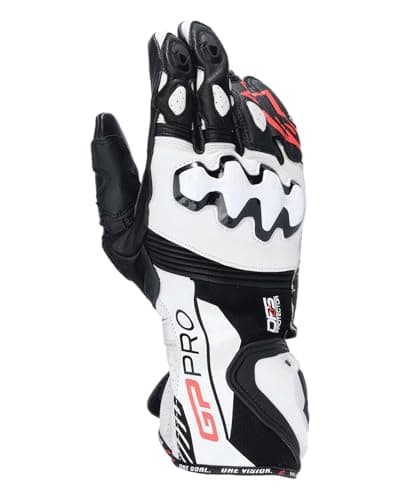
Alpinestars GP Pro R4: CE certified race gauntlet
See price on AmazonSee it on Amazon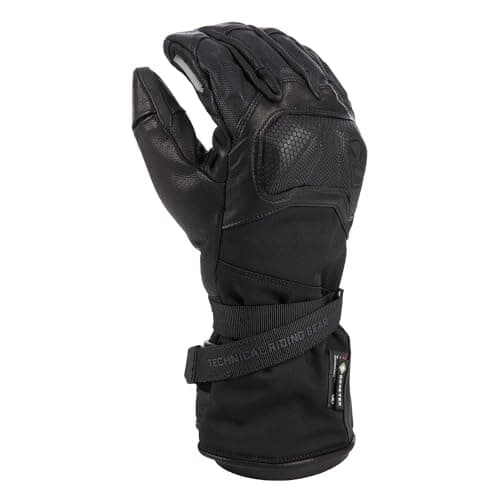
KLIM Badlands GTX Long: Gore-Tex gauntlet with insulation
See price on AmazonSee it on Amazon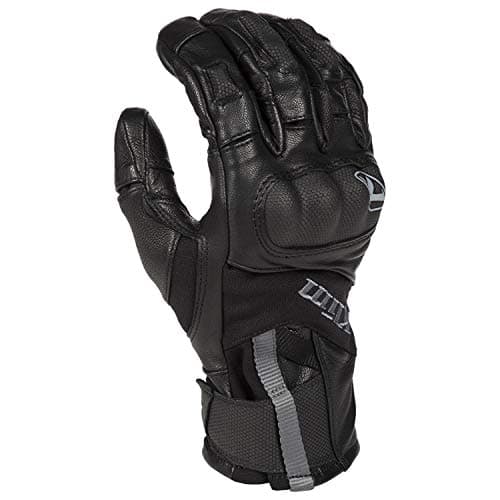
KLIM Adventure GTX Short: Gore-Tex with carbon knuckle
See price on AmazonSee it on Amazon
Riding gloves need to fit more precisely than everyday gloves. Too loose and they can twist or come off in a slide, and bunched fabric in the palm makes it harder to feel the controls. Too tight and your fingers go numb and cold. This page shows how to measure your hand, gives a typical glove size chart, explains how gauntlet and short-cuff gloves differ, and decodes the EN 13594 label found inside CE-certified motorcycle gloves. It is for riders buying gloves online or switching between brands.
How to measure your hand
Use a soft tape measure and measure your dominant hand, which is usually slightly larger. Most brands size by hand circumference, and some also give hand length. If your two numbers point to different sizes, length usually matters more for finger fit, and circumference matters more for palm fit; check which the brand chart prioritizes.
- 1
Circumference: wrap the tape around your hand at the knuckles, just below the fingers, excluding the thumb. Keep your hand flat and relaxed.
- 2
Length: measure from the crease at the base of your palm to the tip of your middle finger.
- 3
Repeat both measurements and use the larger numbers.
- 4
Check the brand's chart, which may be in inches or centimeters.
Typical motorcycle glove size chart
The table below shows a typical relationship between hand circumference and glove size. It is only a starting point. Glove sizing varies more between brands than helmet sizing does, and race gloves with pre-curved fingers fit differently from touring gloves.
If you are between sizes, consider what the glove is for. A summer glove can fit closer, while a winter or heated glove needs a little room for insulation and circulation.
XS
- Hand circumference (in)
- 7 - 7.5
- Hand circumference (cm)
- 17.8 - 19.0
S
- Hand circumference (in)
- 7.5 - 8
- Hand circumference (cm)
- 19.0 - 20.3
M
- Hand circumference (in)
- 8 - 9
- Hand circumference (cm)
- 20.3 - 22.9
L
- Hand circumference (in)
- 9 - 10
- Hand circumference (cm)
- 22.9 - 25.4
XL
- Hand circumference (in)
- 10 - 11
- Hand circumference (cm)
- 25.4 - 27.9
2XL
- Hand circumference (in)
- 11 - 12
- Hand circumference (cm)
- 27.9 - 30.5
| Size | Hand circumference (in) | Hand circumference (cm) |
|---|---|---|
| XS | 7 - 7.5 | 17.8 - 19.0 |
| S | 7.5 - 8 | 19.0 - 20.3 |
| M | 8 - 9 | 20.3 - 22.9 |
| L | 9 - 10 | 22.9 - 25.4 |
| XL | 10 - 11 | 25.4 - 27.9 |
| 2XL | 11 - 12 | 27.9 - 30.5 |
Note.Brands such as Alpinestars, KLIM and Dainese publish their own charts, and some use numeric sizes. Always check the chart for the exact glove.
How a riding glove should fit
Put the glove on and close all straps. Then grip a handlebar or something similar, like a broom handle, and hold it for a minute. This is the position that matters. Many riding gloves are pre-curved, so they can feel tight with your hand flat but correct when gripping.
The fingertips should just touch the ends of the glove fingers when gripping, without being crushed. There should be no loose material in the palm, which can bunch and blister. Knuckle armor should sit over your knuckles, and any finger armor should line up with your finger joints.
- Fingertips just reach the ends while gripping.
- No folds of loose material in the palm.
- Knuckle protector sits over the knuckles, not behind them.
- Wrist closure tightens so the glove cannot be pulled off.
- You can operate the clutch, brake and switches without fumbling.
Gauntlet or short cuff
Gauntlet gloves have a long cuff that extends over the jacket sleeve. They cover the wrist fully, add protection to the lower forearm and keep wind and rain out of the sleeve. They are standard on sport and race gloves such as the Alpinestars GP Pro R4 and on many touring and winter gloves.
Short-cuff gloves end at the wrist and are worn under the jacket sleeve. They are cooler and easier to put on, making them popular for summer, city riding and adventure riding. The KLIM Adventure GTX Short is one example. For short-cuff gloves, check that the jacket sleeve covers the cuff fully in riding position. See our motorcycle glove guide for both styles.
Wrist coverage
- Gauntlet
- Full, over the sleeve
- Short cuff
- Depends on jacket sleeve
Warmth and weather
- Gauntlet
- Better seal
- Short cuff
- Cooler, more airflow
Ease of use
- Gauntlet
- Slower on and off
- Short cuff
- Quick on and off
Typical use
- Gauntlet
- Sport, track, touring, winter
- Short cuff
- Summer, commuting, adventure
| Gauntlet | Short cuff | |
|---|---|---|
| Wrist coverage | Full, over the sleeve | Depends on jacket sleeve |
| Warmth and weather | Better seal | Cooler, more airflow |
| Ease of use | Slower on and off | Quick on and off |
| Typical use | Sport, track, touring, winter | Summer, commuting, adventure |
Reading the EN 13594 label
In Europe, motorcycle gloves sold as protective equipment are tested to EN 13594. Many gloves sold in the US carry the same certification, shown on a label inside the cuff. The label usually shows a motorcycle rider pictogram, the standard number, the protection level, and sometimes the letters KP.
Level 1 and Level 2 describe how well the glove performed in tests such as abrasion, tear and seam strength, with Level 2 being the higher level. KP means the glove includes knuckle protection that has passed the impact test. A glove without a CE label may still be well made, but you have no independent test result to compare.
EN 13594
- Meaning
- European standard for motorcyclist protective gloves
Level 1
- Meaning
- Meets the basic level of the test requirements
Level 2
- Meaning
- Meets the higher level of the test requirements
KP
- Meaning
- Knuckle protection tested for impact
| Marking | Meaning |
|---|---|
| EN 13594 | European standard for motorcyclist protective gloves |
| Level 1 | Meets the basic level of the test requirements |
| Level 2 | Meets the higher level of the test requirements |
| KP | Knuckle protection tested for impact |
Special cases: heated and winter gloves
Heated gloves, such as the Gerbing 12V models, contain heating elements and wiring, so they need a fit that is snug but not tight. A glove that compresses your fingers reduces circulation and makes your hands colder, even with the heat on. Some riders go up half a size in heated or insulated gloves.
Waterproof gloves with a membrane, such as Gore-Tex models, have an extra layer inside and can feel slightly smaller than the same size in a summer glove. Try them with the closure fully tightened.
Frequently asked questions
Should motorcycle gloves be tight? Snug, not tight. Your fingertips should just reach the ends when gripping, with no loose palm material, but you should not feel pressure that numbs your fingers.
Do motorcycle gloves stretch? Leather gloves relax a little with use, especially in the palm. Textile gloves change very little. Buy leather gloves snug and textile gloves at the size you want to wear.
What does KP mean on motorcycle gloves? KP on an EN 13594 label means the glove's knuckle protection passed the impact test.
Which hand should I measure? Measure your dominant hand, which is often slightly larger, and use the bigger number.
What you need for this
- See price on AmazonAmazon
Alpinestars GP Pro R4: CE certified race gauntlet
 See price on AmazonAmazon
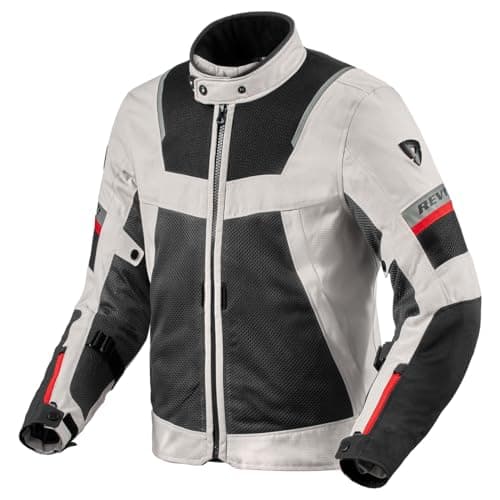
REV'IT! Tornado 4 H2O: Level 2 armor, 3-season liners
From Best armored motorcycle jackets by season and armor level