Explainer
Motorcycle boot ratings: EN 13634 explained
Published
Short answer
EN 13634 is the European standard for motorcycle boots. The label shows a boot symbol with four numbers, each 1 or 2, for height, abrasion resistance, impact cut resistance and transverse rigidity, which is how well the boot resists being crushed side to side. A 2 is the higher level in each test. Extra codes can show tested ankle protection (IPA), shin protection (IPS) and water resistance (WR).
Gear for this job
All 8 picks compared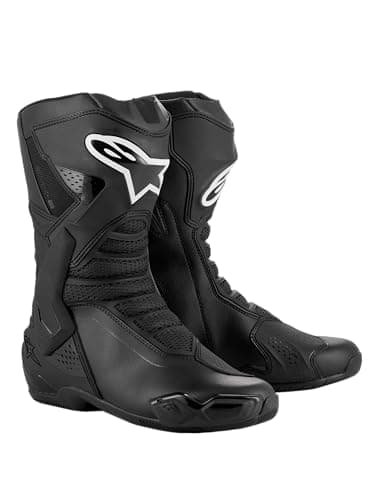
Alpinestars SMX-6 v3: EN 13634:2017 sport boot
See price on AmazonSee it on Amazon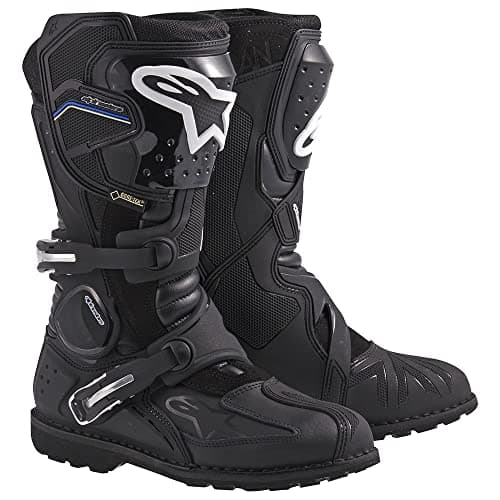
Alpinestars Toucan Gore-Tex: CE adventure boot
See price on AmazonSee it on Amazon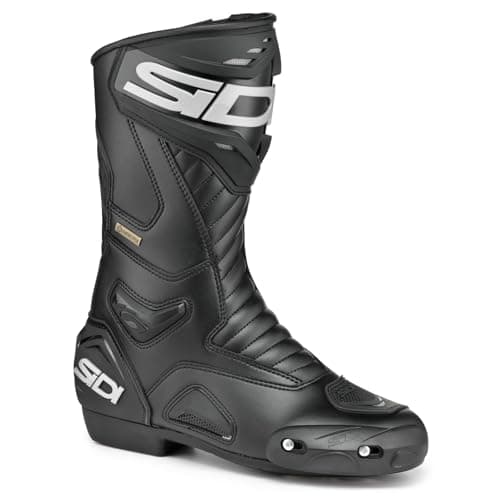
Sidi Performer Gore-Tex: waterproof sport boot
See price on AmazonSee it on Amazon
Many riding boots carry a CE label with a small boot icon and a row of numbers. Few riders know what those numbers mean, which makes it hard to compare a short urban riding shoe with a tall touring boot. This page decodes the EN 13634 label, explains each test in plain terms, and helps you match a boot's rating to the riding you do. It is for anyone shopping for street, touring or adventure boots.
What EN 13634 covers
EN 13634 sets minimum protection levels for motorcycle riders' footwear. Boots are tested for how well the upper resists abrasion, how well the material resists cuts from sharp edges, and how strongly the sole and upper resist crushing across the foot. The standard also checks basic construction, such as sole grip and seam strength.
Boots that pass carry a label, usually sewn inside the tongue or the upper, with the standard number and the pictogram. A boot sold for riding without this label has not been certified, even if it looks protective.
Reading the four numbers
The pictogram shows a boot outline with four boxes, read in a fixed order. Each box has a 1 or a 2. In every case, 2 is the higher level. A boot labeled 2 2 2 2 has passed the higher level in all four tests. A low-cut riding shoe might show 1 2 2 2, meaning it is a shorter style but still passed the higher abrasion, cut and rigidity tests.
Height is not a protection test in itself. It tells you the boot's category, so a short boot is not marked down for being short. Use it to understand what kind of boot you are looking at, then compare the other three numbers.
1
- What it rates
- Boot height
- 1
- Lower boot
- 2
- Taller boot covering more of the leg
2
- What it rates
- Abrasion resistance
- 1
- Basic level
- 2
- Higher level
3
- What it rates
- Impact cut resistance
- 1
- Basic level
- 2
- Higher level
4
- What it rates
- Transverse rigidity
- 1
- Basic level
- 2
- Higher level
| Position | What it rates | 1 | 2 |
|---|---|---|---|
| 1 | Boot height | Lower boot | Taller boot covering more of the leg |
| 2 | Abrasion resistance | Basic level | Higher level |
| 3 | Impact cut resistance | Basic level | Higher level |
| 4 | Transverse rigidity | Basic level | Higher level |
What each test means on the road
Abrasion resistance is how long the boot material lasts while sliding on a rough surface. This matters in any slide, especially for the outside of the foot and ankle. Impact cut resistance measures how well the material stops a blade-like edge, similar to road debris or a sharp piece of the bike.
Transverse rigidity measures how well the boot resists being squeezed from side to side. This is the test that protects against crush injuries, such as a foot trapped under a fallen bike. Sport and adventure boots with stiff shanks and reinforced shells usually score 2 here. Casual riding shoes vary, so check the label rather than judging by looks.
Optional codes: IPA, IPS and WR
Beyond the four numbers, boots can be tested for extra protection and features. These appear as additional codes on the label. They are optional, so a boot without them has not failed anything. It just was not tested for that feature.
- IPA: impact protection at the ankle, tested on the ankle area.
- IPS: impact protection for the shin, found on taller boots.
- WR: water resistance, tested for leaks after flexing in water.
Note.A waterproof membrane listed in a product description is not the same as a WR test result. Check the label if water resistance matters to you.
Matching a rating to your riding
For commuting in town, a shorter boot with 2s for abrasion, cut and rigidity is a reasonable choice and easier to walk in. For highway and touring, a taller boot with ankle protection adds coverage over the shin and ankle bones. For adventure and off-road riding, look for high transverse rigidity, IPA and IPS, plus a sole that handles walking on loose ground.
Fit matters as much as the label. A boot that is too loose lets your foot move inside it in a crash, and one that is too tight is hard to ride in all day. Our guides to the best motorcycle boots and the best adventure motorcycle boots show the ratings for each model.
Urban riding shoe
- Common pattern
- 1 2 2 2 or lower
- Extras to look for
- Ankle cups
Touring boot
- Common pattern
- 2 2 2 2
- Extras to look for
- WR, IPA
Sport or track boot
- Common pattern
- 2 2 2 2
- Extras to look for
- IPA, IPS
Adventure boot
- Common pattern
- 2 2 2 2
- Extras to look for
- IPA, IPS, WR
| Style | Common pattern | Extras to look for |
|---|---|---|
| Urban riding shoe | 1 2 2 2 or lower | Ankle cups |
| Touring boot | 2 2 2 2 | WR, IPA |
| Sport or track boot | 2 2 2 2 | IPA, IPS |
| Adventure boot | 2 2 2 2 | IPA, IPS, WR |
Boots and the rest of your gear
Boot ratings sit alongside the other CE standards on your gear. Jackets and pants use EN 17092 garment classes with EN 1621 armor, gloves use EN 13594, and helmets have their own standards. Reading all of them helps you build a kit with no weak link. See CE armor levels and EN 17092 classes for jackets and pants, and motorcycle glove sizing for hands.
When comparing two boots with the same label, the differences come down to fit, comfort, closure system, weight and how easy they are to walk in. Try them on with the socks you ride in, and walk around before committing.
Frequently asked questions
What does 2222 mean on motorcycle boots? It means the boot is in the taller height category and passed the higher level for abrasion, cut and transverse rigidity under EN 13634.
Is a CE rated boot required in the US? No. US law does not require certified riding boots, but the EN 13634 label is a useful sign that the boot has been independently tested.
Are short riding boots safe? A short boot can still score the higher level in abrasion, cut and rigidity. It covers less of the leg, so taller boots protect more of the ankle and shin.
Does WR mean fully waterproof? WR means the boot passed a water resistance test. It is a good sign, but long rides in heavy rain can still challenge any boot.
What you need for this
- See price on AmazonAmazon
Alpinestars SMX-6 v3: EN 13634:2017 sport boot
From Best motorcycle riding boots for street, touring and sport
 See price on AmazonAmazon
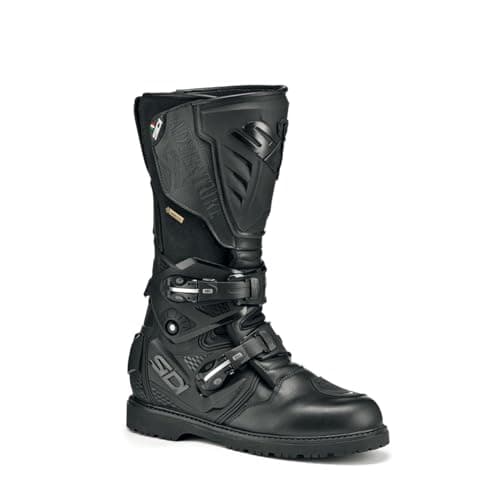
Sidi Adventure 2 Gore: shin plate, hyperextension control