How-to
Intercoms for open face and half helmets
Published
Short answer
Most mainstream intercoms, including Cardo Packtalk and Sena models, work on open face and half helmets. Use the boom microphone with its foam windsock, mount the unit with a clamp if it fits between shell and liner or with the adhesive plate if not, and fix the speakers inside the liner over your ears. Expect more wind noise than in a full face helmet.
Gear for this job
All 8 picks compared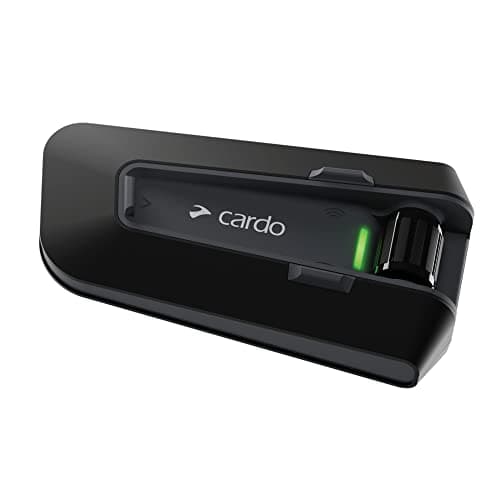
Cardo Packtalk Neo: mesh for up to 15 riders
See price on AmazonSee it on Amazon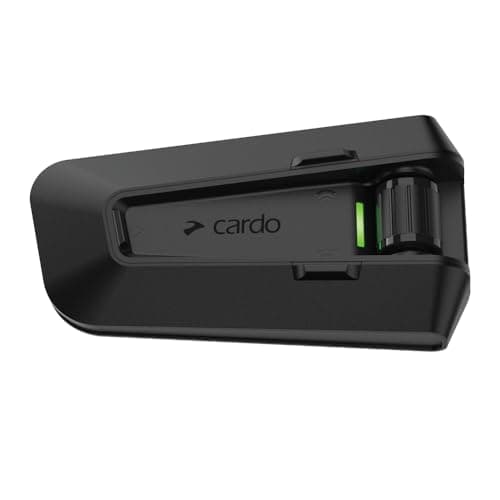
Cardo Packtalk Pro: crash detection, JBL 45 mm
See price on AmazonSee it on Amazon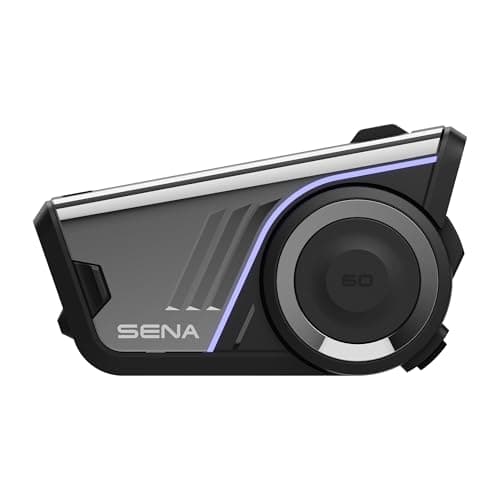
Sena 60S: Wave, Mesh 3.0 and Bluetooth, 24 hours
See price on AmazonSee it on Amazon
Open face and half helmets are popular with cruiser and scooter riders, but they have no chin bar for a mic and often no speaker pockets. This page explains how to fit an intercom to a 3/4 open face or half helmet: choosing the mic, mounting the unit, placing speakers, managing wind noise, and which accessory kits help. It is for riders who want to talk with a passenger or group, or take calls and navigation, without a full face helmet.
What is different about open helmets
A full face helmet gives the intercom three easy spots: the chin bar for the mic, speaker pockets in the EPS liner, and a large shell surface for the mount. An open face (3/4) helmet keeps the shell and usually has room for speakers, but there is no chin bar. A half helmet has very little shell below the ears, often a thin liner, and sometimes no room for speakers at all.
Wind is the other difference. Your mouth is exposed, so the mic has to cope with air rushing past, and your ears are more exposed too. Good mic placement and a windsock matter more here than on any other helmet.
Full face
Street, sport and touring
Modular
Touring, riders who wear glasses
Adventure
Mixed road and dirt
Open face (3/4)
Cruisers and scooters
Half
Short, slow rides
Off-road
Dirt and motocross, with goggles
Use the boom mic with a windsock
Every major intercom ships with or offers a boom microphone on a flexible arm. On an open helmet, the boom mounts at the left side of the helmet and curves round so the mic sits just in front of your mouth. Fit the foam windsock that comes in the box; on open helmets some riders add a thicker fur-style windsock for highway speeds.
Position the mic close to your lips, almost touching, and directly in front of your mouth rather than below the chin. Most mics are marked on the side that should face your mouth. Modern intercoms use noise processing to reduce wind, but they work best when the mic is close.
- Mic close to and in front of your mouth
- Correct side facing your lips
- Foam or fur windsock fitted
- Arm bent so it does not touch your face or move in wind
- Cable secured so it does not flap
Clamp vs adhesive mount
Clamp mounts slide between the shell and the liner and hold by pressure. On many open face helmets there is a usable gap at the lower left edge. Half helmets often have a thin rim with no gap, so the adhesive mount is the usual choice. Clean the surface with isopropyl alcohol, press firmly, and let it cure before riding. On a curved half helmet, choose the flattest area you can find so the adhesive bonds fully.
The installation steps are the same as on a full face helmet; see how to install a Cardo Packtalk for a full walk-through.
Clamp mount
- Best for
- Open face helmets with a gap between shell and liner
- Watch out for
- Must be firm without forcing; may not fit thin-edged shells
Adhesive mount
- Best for
- Half helmets and helmets without a usable gap
- Watch out for
- Needs a clean, flat area and curing time
Helmet maker's approved fitment
- Best for
- Helmets offering an intercom-ready mount
- Watch out for
- Only for specific intercoms
| Mount | Best for | Watch out for |
|---|---|---|
| Clamp mount | Open face helmets with a gap between shell and liner | Must be firm without forcing; may not fit thin-edged shells |
| Adhesive mount | Half helmets and helmets without a usable gap | Needs a clean, flat area and curing time |
| Helmet maker's approved fitment | Helmets offering an intercom-ready mount | Only for specific intercoms |
Speakers on open and half helmets
Open face helmets usually have ear pockets in the liner like full face helmets. Stick the speakers in with Velcro, centered over your ears, using spacers if needed.
Half helmets are trickier. Many do not cover the ears, so there is nowhere inside to put a speaker. Options include half-helmet kits or accessories from the intercom maker, which may hold the speakers in ear flaps or let them sit under a skull cap, and helmets with removable ear covers that can hold speakers. Cardo and Sena both sell accessory and audio kits; check the maker's compatibility list for your model before buying.
Note.Some states limit headsets or earphones while riding. Speakers mounted in a helmet are treated differently from earbuds in some states. Check your state's laws.
Managing wind noise
Open helmets are louder than full face helmets, so you will need more volume and a well-placed mic. Most intercoms offer automatic volume that rises with speed or ambient noise. Many riders use filtered earplugs, which can make speech through the speakers clearer by cutting the wind roar.
A windscreen that sends clean air over your helmet helps a lot. Turbulence from a short screen can make speech hard to hear at highway speed. See motorcycle helmet wind noise for screen and earplug tips.
Choosing an intercom and helmet
For riding with a passenger or a small group on an open helmet, any current mesh or Bluetooth intercom with a boom mic will work. Mesh units like the Cardo Packtalk series and the Sena 50S, 50R and 60S are popular for groups. The best motorcycle intercoms and the best Cardo Packtalk intercoms guides compare them.
If you are open to a different helmet, the best open face motorcycle helmets guide lists 3/4 helmets with room for speakers. Remember that a half helmet offers less coverage than a 3/4 or full face helmet; the types of motorcycle helmets article explains the trade-offs.
Frequently asked questions
Can you use a Cardo Packtalk with a half helmet? Yes. Use the boom mic and the adhesive mount, and use an accessory kit or ear covers for the speakers if the helmet does not cover your ears.
Which mic should I use on an open face helmet? The boom mic with a windsock, positioned close to and directly in front of your mouth.
Why do people say I sound windy? The mic is too far from your mouth, missing its windsock, or facing the wrong way. Move it closer and fit a thicker windsock.
Do I need a clamp or adhesive mount? Use the clamp if it fits firmly between shell and liner. On most half helmets, the adhesive mount is the reliable choice.
What you need for this
- See price on AmazonAmazon
Cardo Packtalk Neo: mesh for up to 15 riders
From Best motorcycle intercoms for solo riders, couples and groups
 See price on AmazonAmazon
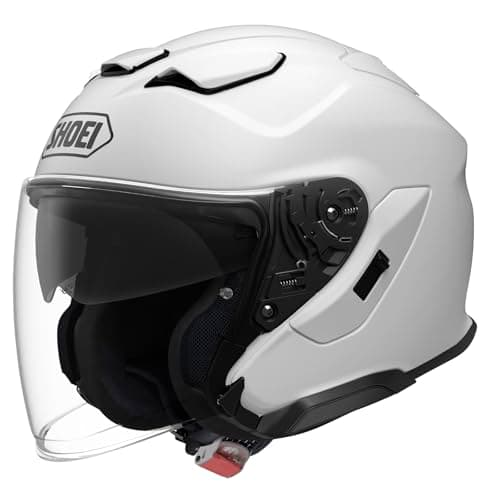
Shoei J-Cruise 3: DOT and ECE 22.06, sun visor
From Best open face motorcycle helmets for cruisers and scooters
- See price on AmazonAmazon
Sena 60S: WAVE, Mesh 3.0 and 24 h talk time