Explainer
Motorcycle helmet types explained
Published
Short answer
There are six main motorcycle helmet types: full face, modular (flip-up), adventure or dual sport, open face (3/4), half, and off-road or motocross. Full face helmets cover the most of your head and face. Modular helmets add a chin bar that lifts for convenience. Adventure helmets mix a full face design with a peak and wide eye port. Open face and half helmets leave the face exposed, and off-road helmets are built for goggles and airflow at low speed.
Gear for this job
All 8 picks compared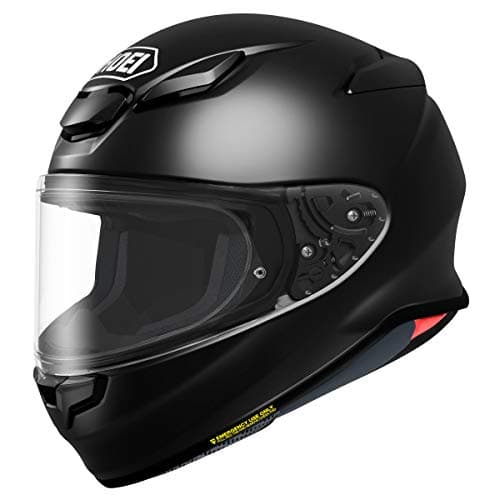
Shoei RF-1400: Snell M2020 and DOT listed
See price on AmazonSee it on Amazon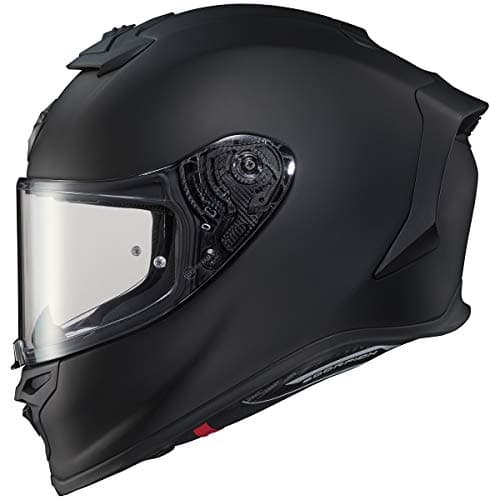
Scorpion EXO-R1 Air: DOT and ECE, 3.05 lb
See price on AmazonSee it on Amazon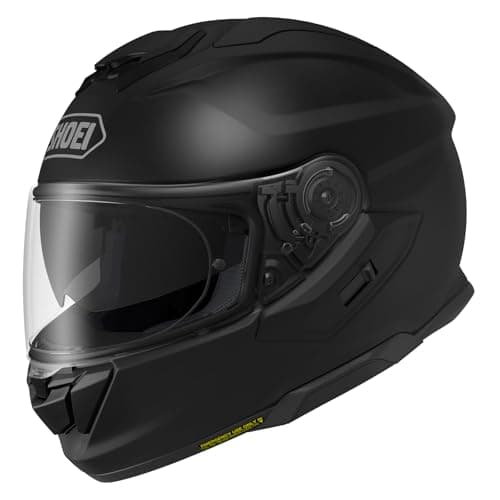
Shoei GT-Air 3: touring full face with sun visor
See price on AmazonSee it on Amazon
If you are buying your first helmet, or thinking about a second one for a different kind of riding, the number of styles can be confusing. This page explains each motorcycle helmet type, what it does well, where it falls short, and who usually chooses it. There is a comparison table you can scan, plus links to our gear guides for each type so you can move straight to models once you know what you want.
Full face helmets
A full face helmet is one piece, with a fixed chin bar and a visor. It offers the most coverage, because the chin bar protects your jaw and face, and it usually has the best aerodynamics at speed. Sport, sport touring and track helmets are all full face designs, with differences in eye port shape, ventilation and padding.
The tradeoffs are that you cannot open it at a gas stop and it can feel warm in slow traffic. For most street riders it is the default choice. See our list of the best full face motorcycle helmets.
Full face
Street, sport and touring
Modular
Touring, riders who wear glasses
Adventure
Mixed road and dirt
Open face (3/4)
Cruisers and scooters
Half
Short, slow rides
Off-road
Dirt and motocross, with goggles
Modular and adventure helmets
A modular helmet looks like a full face helmet, but the chin bar hinges up. That makes it easy to talk, drink or wear glasses on and off, and it is popular with touring riders. The hinge and latch add weight, and not every modular is approved for riding with the chin bar up, so check the certification label. Our comparison of full face vs modular helmets goes deeper, and the best modular helmets list covers models.
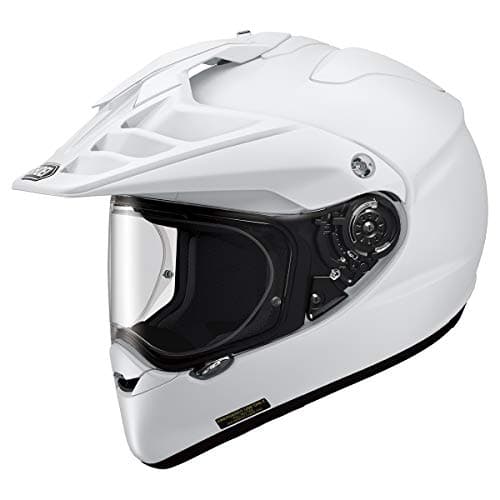
An adventure or dual sport helmet blends a street full face with off-road features: a peak to block sun, a longer chin bar for airflow, and a visor wide enough to fit goggles on some models when the visor is removed. It suits riders who mix pavement with gravel. The peak can catch wind at highway speed. See the best adventure helmets.
Open face, half and off-road helmets
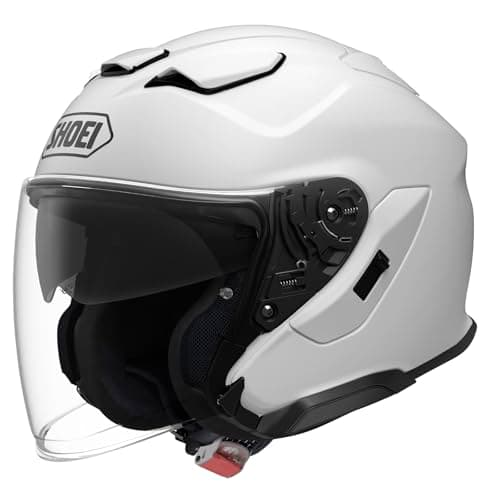
An open face or 3/4 helmet covers the top, back and sides of the head but leaves the face open, often with a visor or bubble shield. It is popular with cruiser and scooter riders who want airflow and visibility. A half helmet covers only the top of the head. It is the lightest option but offers the least protection, with nothing covering the ears, jaw or face.
An off-road or motocross helmet has an extended chin bar, a large peak and no visor. You wear it with goggles. It is light and well ventilated for low-speed effort, but it is noisy and catches wind on the highway. Open face picks are in our best open face helmets guide.
All six types compared
Coverage here means how much of the head and face the shell covers. Noise and weight vary a lot by model, so the table gives general tendencies only.
Full face
- Coverage
- Head, face, jaw
- Best for
- Most street riding, sport, touring
- Main tradeoff
- Cannot open at stops, warmer in traffic
Modular
- Coverage
- Head, face, jaw when closed
- Best for
- Touring, glasses wearers
- Main tradeoff
- Heavier, check chin-up approval
Adventure
- Coverage
- Head, face, jaw
- Best for
- Mixed road and gravel
- Main tradeoff
- Peak can buffet at speed
Open face (3/4)
- Coverage
- Head, ears, no chin
- Best for
- Cruisers, scooters, city
- Main tradeoff
- No jaw or face protection
Half
- Coverage
- Top of head
- Best for
- Short, slow rides where legal
- Main tradeoff
- Least protection
Off-road
- Coverage
- Head, face, jaw, no visor
- Best for
- Dirt and trail
- Main tradeoff
- Noisy and draggy on highway
| Type | Coverage | Best for | Main tradeoff |
|---|---|---|---|
| Full face | Head, face, jaw | Most street riding, sport, touring | Cannot open at stops, warmer in traffic |
| Modular | Head, face, jaw when closed | Touring, glasses wearers | Heavier, check chin-up approval |
| Adventure | Head, face, jaw | Mixed road and gravel | Peak can buffet at speed |
| Open face (3/4) | Head, ears, no chin | Cruisers, scooters, city | No jaw or face protection |
| Half | Top of head | Short, slow rides where legal | Least protection |
| Off-road | Head, face, jaw, no visor | Dirt and trail | Noisy and draggy on highway |
How to choose between them
Start with where you ride and how fast. Highway and sport riding favor a full face. Long tours with stops and conversation favor a modular. Mixed surfaces point to adventure. Coverage matters most, and the chin and face are commonly hit in crashes, so think hard before choosing an open face or half helmet for regular riding.
Then think about comfort: noise on long trips, ventilation in hot weather, and whether you wear glasses. Our how to choose a motorcycle helmet guide covers those points, and quiet helmets are worth a look if you ride long distances.
Many riders end up with two helmets over time, such as a full face for highway trips and an open face for short summer rides around town. If you can only buy one, pick the type that protects you on the fastest, longest rides you do regularly.
Frequently asked questions
Which motorcycle helmet type is safest? A full face helmet generally offers the most coverage. Modular and adventure helmets also cover the face when closed. Fit and certification matter as much as type.
Is a modular helmet as safe as a full face? A well-made modular with a closed chin bar offers full face coverage, but the hinge adds complexity. Check that it carries the certifications you want and read our full face vs modular comparison.
Can I use an off-road helmet on the street? Yes, if it is DOT certified. It will be noisier and catch more wind at highway speed, and you need goggles or glasses for eye protection.
Are half helmets legal? DOT-certified half helmets are legal where helmet laws allow them, but they offer the least protection. Check the rules in your state.
What you need for this
- See price on AmazonAmazon
Shoei RF-1400: quieter shell, SNELL M2020 and DOT
From Best full face motorcycle helmets for street and sport touring
 See price on AmazonAmazon
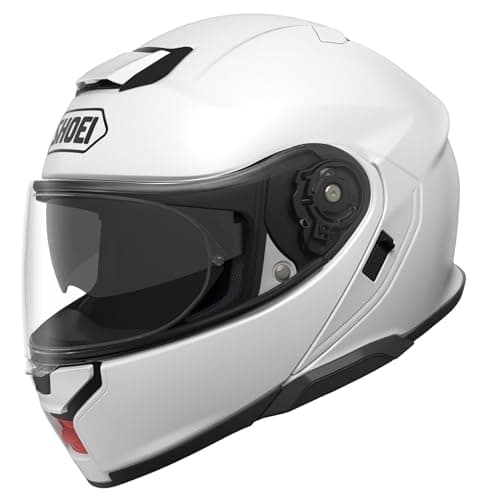
Shoei Neotec 3: modular that reduces wind noise
From Best modular motorcycle helmets for touring and commuting
 See price on AmazonAmazon
Shoei Hornet X2: Snell M2020D, 3.99 lbs in medium
From Best adventure and dual sport helmets for road and dirt
 See price on AmazonAmazon
Shoei J-Cruise 3: DOT and ECE 22.06, sun visor
From Best open face motorcycle helmets for cruisers and scooters