Explainer
DOT FMVSS 218 helmet label explained
Published
Short answer
A DOT label means the manufacturer certifies that the helmet model meets Federal Motor Vehicle Safety Standard No. 218, the US standard for motorcycle helmets. There is no government pre-approval: makers self-certify, and NHTSA buys helmets and tests them for compliance. A genuine label sits on the back of the shell and shows the DOT symbol, FMVSS No. 218, the word CERTIFIED, and the maker and model.
Gear for this job
All 8 picks compared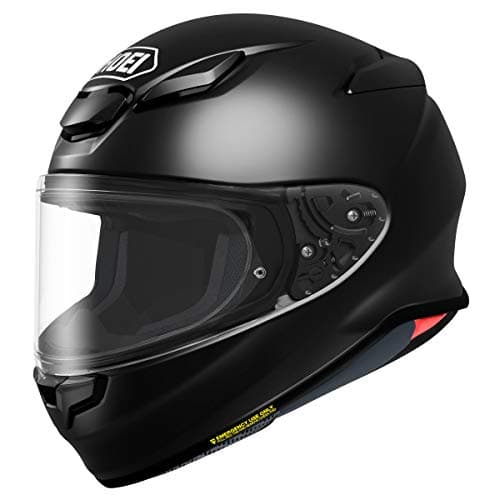
Shoei RF-1400: Snell M2020 and DOT listed
See price on AmazonSee it on Amazon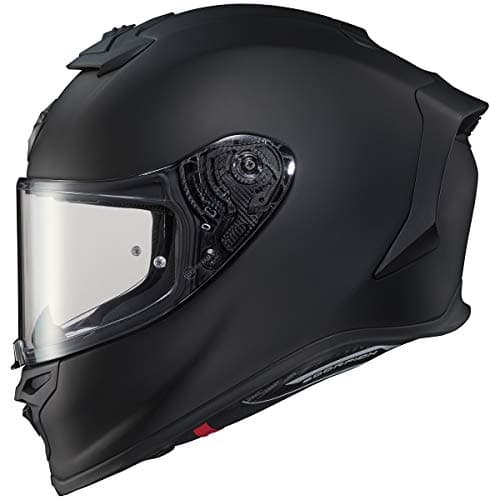
Scorpion EXO-R1 Air: DOT and ECE, 3.05 lb
See price on AmazonSee it on Amazon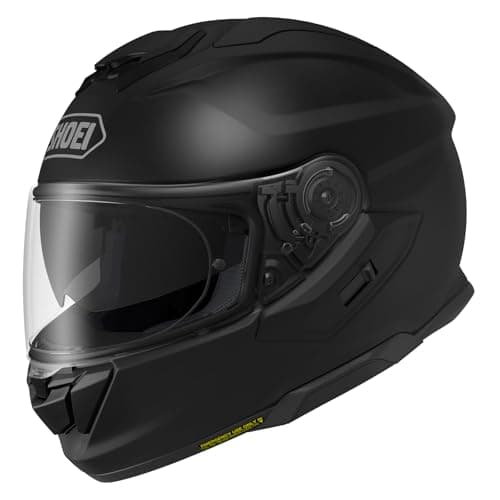
Shoei GT-Air 3: touring full face with sun visor
See price on AmazonSee it on Amazon
Every helmet sold for street use in the US must meet FMVSS 218, and the DOT sticker on the back is how a maker shows it. But the sticker is easy to fake, and the phrase 'DOT approved' is a little misleading. This page explains what the standard tests, how certification actually works, what a compliant label looks like, and the physical signs that give away a novelty helmet wearing a fake sticker. It is for new riders, anyone buying a helmet secondhand or from an unfamiliar seller, and anyone comparing DOT with ECE and Snell. To decode other labels on your helmet, try our helmet rating decoder.
What FMVSS 218 is
FMVSS 218 is a federal safety standard issued by the National Highway Traffic Safety Administration (NHTSA), part of the US Department of Transportation. That is why people call it the DOT standard. It sets minimum performance requirements for helmets intended for motorcycle riders on public roads, and it applies to every helmet sold for that purpose in the US.
The standard covers three main areas. Impact attenuation measures how much of a blow the helmet absorbs before it reaches the head form. Penetration resistance checks that a pointed striker cannot push through the shell. Retention checks that the chin strap and its fasteners hold under load without stretching too far. The standard also sets a minimum field of view and labeling rules.
Impact attenuation
- What it checks
- How much force reaches a head form when the helmet hits flat and hemispherical anvils
Penetration
- What it checks
- Whether a pointed striker dropped on the shell can contact the head form
Retention system
- What it checks
- Whether the strap and buckle hold under a static load without excessive stretch
Peripheral vision
- What it checks
- A minimum field of view to the sides
Labeling
- What it checks
- Required marks on the outside of the shell and information inside
| Test | What it checks |
|---|---|
| Impact attenuation | How much force reaches a head form when the helmet hits flat and hemispherical anvils |
| Penetration | Whether a pointed striker dropped on the shell can contact the head form |
| Retention system | Whether the strap and buckle hold under a static load without excessive stretch |
| Peripheral vision | A minimum field of view to the sides |
| Labeling | Required marks on the outside of the shell and information inside |
Self-certification: why 'DOT approved' is not quite right
DOT does not approve helmets before they go on sale. Under federal law, the manufacturer certifies that its helmet meets FMVSS 218 and applies the label itself. NHTSA then enforces the standard by purchasing helmets on the open market and sending them to test labs for compliance testing.
If a model fails, NHTSA can require the maker to recall it and can seek civil penalties. NHTSA publishes compliance test results, so a helmet model that failed is a matter of public record. This system is different from ECE 22.06, which requires approval by an accredited lab before sale plus batch testing of production. For the full comparison, see DOT vs ECE vs Snell and our explainer on ECE 22.06.
What a genuine DOT label looks like
Since NHTSA updated its labeling rule in 2013, a compliant helmet carries a label on the outside back of the shell with several required elements, not just the three letters DOT. The label must be permanently attached and legible. Some makers put it under a clear coat; others use a sticker.
Inside the helmet, there should also be a permanent label with the manufacturer's name, the size, the month and year of manufacture, and information about the materials and care. Missing interior labeling is a warning sign.
- 1DOT FMVSS 218 sticker on the back of the shell
- 2ECE 22.06 label sewn on the chin strap with the approval number
- 3Snell M2020 sticker inside the helmet, often under the comfort liner
A helmet can carry more than one label. For street use in the US, the DOT label is the required one.
- The DOT symbol
- The text FMVSS No. 218
- The word CERTIFIED
- The manufacturer's name or brand
- The model designation
How to spot a novelty helmet with a fake sticker
Novelty helmets are thin shells sold for looks. They are not built to pass FMVSS 218, and some are sold with a loose DOT sticker in the box or with a fake one already applied. NHTSA has published guidance on identifying them, and the physical signs are usually obvious once you know what to look for.
Inner liner
- Compliant helmet
- Thick, firm polystyrene (EPS) foam, usually about an inch thick
- Typical novelty helmet
- Thin padding or soft foam only
Weight
- Compliant helmet
- Usually around 3 pounds
- Typical novelty helmet
- Often about a pound or less
Chin strap
- Compliant helmet
- Sturdy strap with solid rivets
- Typical novelty helmet
- Thin strap, weak rivets
Protrusions
- Compliant helmet
- Nothing sticking out more than about two tenths of an inch
- Typical novelty helmet
- Spikes or decorations
Label
- Compliant helmet
- Full FMVSS 218 label with maker and model
- Typical novelty helmet
- Bare DOT sticker or none
Inside label
- Compliant helmet
- Maker, size, date of manufacture
- Typical novelty helmet
- Missing
| Check | Compliant helmet | Typical novelty helmet |
|---|---|---|
| Inner liner | Thick, firm polystyrene (EPS) foam, usually about an inch thick | Thin padding or soft foam only |
| Weight | Usually around 3 pounds | Often about a pound or less |
| Chin strap | Sturdy strap with solid rivets | Thin strap, weak rivets |
| Protrusions | Nothing sticking out more than about two tenths of an inch | Spikes or decorations |
| Label | Full FMVSS 218 label with maker and model | Bare DOT sticker or none |
| Inside label | Maker, size, date of manufacture | Missing |
Note.A novelty helmet offers little or no impact protection. Do not ride in one, even if it has a DOT sticker. If a helmet seems suspiciously light or cheap, check the maker and model against NHTSA's records.
DOT alongside ECE and Snell labels
Many helmets sold in the US carry more than one rating. A helmet can be DOT certified and also carry an ECE 22.06 approval label, usually sewn onto the chin strap, and a Snell sticker inside. Each label means the model met that standard's test at the time it was made. None of them promises a particular outcome in a crash.
For US street riding, the DOT label is the legal requirement. ECE 22.06 adds tests DOT does not have, including an oblique impact test for rotational forces. Snell M2020 is a voluntary standard run by the private Snell Memorial Foundation, with M2020D aimed at DOT markets. If you want a helmet with several ratings, our full face helmet guide notes the labels each model carries.
Buying safely: checks before you pay
Buy from an authorized dealer or the brand's official store where you can. Counterfeit premium helmets exist, and they copy the label along with the graphics. A price far below what every other retailer charges is a reason to be cautious.
Avoid used helmets unless you know their full history. A helmet that has been dropped or crashed can have crushed EPS that you cannot see. See when to replace a motorcycle helmet and what to do with a helmet after a crash.
- 1
Find the label on the outside back of the shell and check it has every required element.
- 2
Look inside for the permanent label with size and date of manufacture.
- 3
Press on the liner. You should feel firm EPS foam under the comfort padding.
- 4
Check the weight feels substantial, around 3 pounds or more for a full face helmet.
- 5
Make sure the maker and model are real and sold by known retailers.
Frequently asked questions
Is DOT approved the same as DOT certified? In everyday use, yes, but certified is the accurate term. The maker certifies compliance and NHTSA tests helmets after they are on sale.
Can I buy a DOT sticker and put it on my helmet? Putting a DOT label on a helmet that has not been certified does not make it compliant. The protection comes from the helmet's construction, not the sticker.
Do all US states require a DOT helmet? Helmet laws vary by state. Where a helmet is required for street riding, it must meet FMVSS 218. Check your state's current rules.
Is an ECE-only helmet legal in the US? A helmet sold for US on-road use is required to meet FMVSS 218. Many ECE helmets sold in the US also carry DOT certification, so check for both labels.
What you need for this
- See price on AmazonAmazon
Shoei RF-1400: quieter shell, SNELL M2020 and DOT
From Best full face motorcycle helmets for street and sport touring
 See price on AmazonAmazon
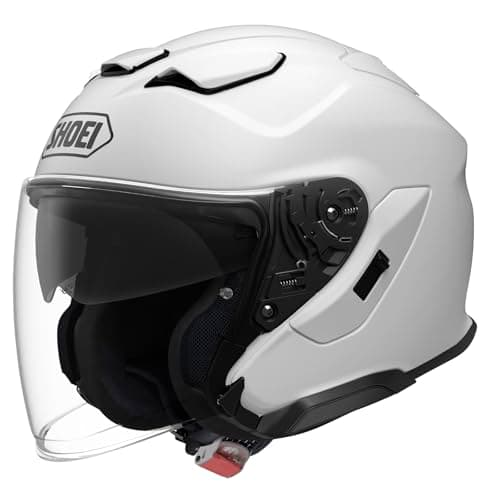
Shoei J-Cruise 3: DOT and ECE 22.06, sun visor
From Best open face motorcycle helmets for cruisers and scooters
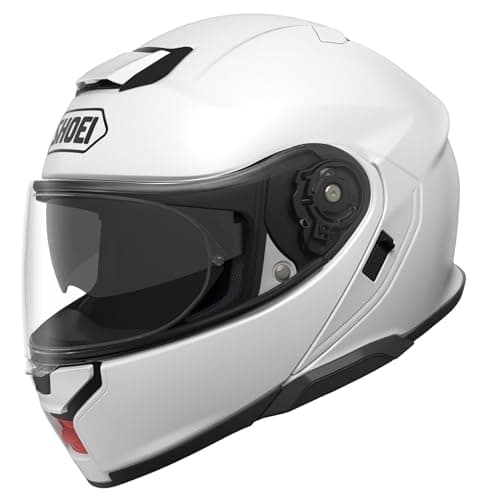 See price on AmazonAmazon
Shoei Neotec 3: modular that reduces wind noise
From Best modular motorcycle helmets for touring and commuting