Explainer
ECE 22.06 explained: what changed from 22.05
Published
Short answer
ECE 22.06 is the current United Nations helmet regulation used in Europe and many other countries. Compared with 22.05 it adds oblique impact tests that measure rotational acceleration, tests impacts at more points and at more than one speed, checks visors against high-speed particle strikes, and covers accessories and modular chin bars. For US riders it is a voluntary extra, since street helmets sold in the US must meet DOT FMVSS 218.
Gear for this job
All 8 picks compared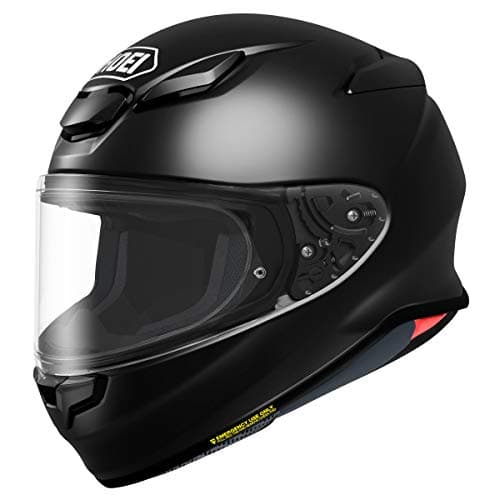
Shoei RF-1400: Snell M2020 and DOT listed
See price on AmazonSee it on Amazon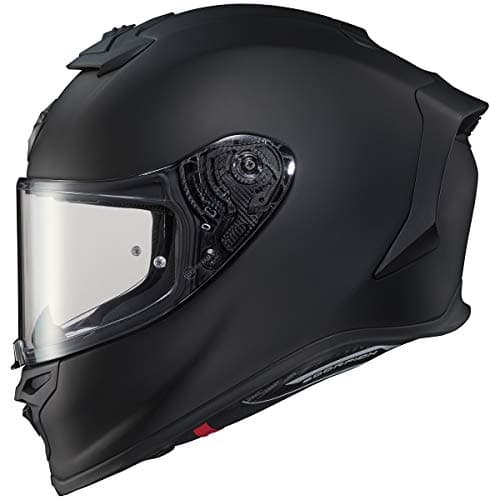
Scorpion EXO-R1 Air: DOT and ECE, 3.05 lb
See price on AmazonSee it on Amazon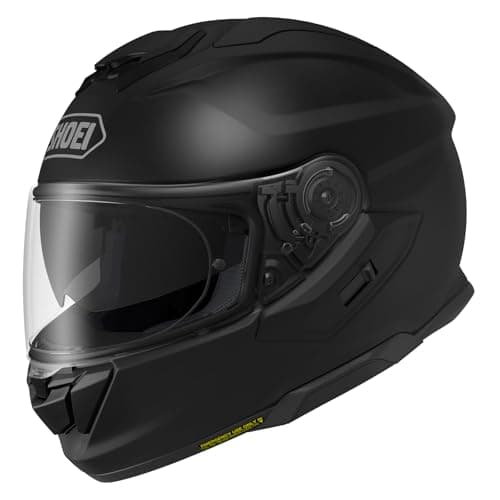
Shoei GT-Air 3: touring full face with sun visor
See price on AmazonSee it on Amazon
Many helmets sold in the US now carry an ECE 22.06 label next to the DOT sticker. If you are comparing helmets and wondering whether 22.06 matters, or whether a helmet still labeled 22.05 is worth buying, this page is for you. It explains what the regulation is, the main changes from 22.05, how to read the label, and how 22.06 fits alongside DOT and Snell when you shop.
What ECE 22.06 is
ECE 22 is a regulation from the United Nations Economic Commission for Europe. Countries that adopt it require helmets sold for road use to be type approved by an authorized test lab. Version 22.05 was used for many years. Version 22.06 replaced it, and in markets that follow the regulation, 22.05 helmets were phased out of sale after a transition period.
Unlike DOT in the US, which relies on manufacturer self-certification backed by government compliance testing, ECE uses type approval plus batch testing of production helmets. That is one reason riders view it as a useful second label. It does not replace DOT in the US. A helmet for US street use still needs the DOT mark. Our article on DOT vs ECE vs Snell compares all three.
What changed from 22.05
The biggest change is rotational testing. Real crashes often hit the head at an angle, which can twist the head sharply. ECE 22.06 adds oblique impact tests that measure rotational acceleration, which 22.05 did not assess. Linear impacts are also tested at a wider range of speeds and at more points around the shell, and the lab chooses some of the points, so a helmet cannot be tuned only for a few known spots.
Visors get tougher scrutiny too. They are tested against a high-speed steel ball strike, and tinted visors must meet light transmission rules. Modular helmets are tested with the chin bar in the positions they are approved for, and accessories sold by the maker, such as built-in communication units, can be tested as part of the helmet.
Rotational impact
- ECE 22.05
- Not measured
- ECE 22.06
- Oblique tests measure rotational acceleration
Impact points
- ECE 22.05
- Fixed set of points
- ECE 22.06
- More points, some chosen by the lab
Impact speeds
- ECE 22.05
- Single main speed
- ECE 22.06
- Multiple speeds, including lower energy
Visor
- ECE 22.05
- Basic checks
- ECE 22.06
- High-speed particle test, tint rules
Modular chin bars
- ECE 22.05
- Limited
- ECE 22.06
- Tested in approved positions
Accessories
- ECE 22.05
- Not covered
- ECE 22.06
- Maker's accessories can be tested with helmet
| Area | ECE 22.05 | ECE 22.06 |
|---|---|---|
| Rotational impact | Not measured | Oblique tests measure rotational acceleration |
| Impact points | Fixed set of points | More points, some chosen by the lab |
| Impact speeds | Single main speed | Multiple speeds, including lower energy |
| Visor | Basic checks | High-speed particle test, tint rules |
| Modular chin bars | Limited | Tested in approved positions |
| Accessories | Not covered | Maker's accessories can be tested with helmet |
How to read the 22.06 label
The ECE label is usually sewn onto the chin strap. It shows a circle with a capital E and a number that identifies the country that granted the approval. Below it is an approval number. On 22.06 helmets the approval number begins with 06, while 22.05 helmets show 05. Modular helmets may also show a code that says whether they are approved with the chin bar down only or in both positions.
If you want help reading every code on the label, the helmet rating decoder walks through each field. For the US sticker on the back of the shell, see DOT helmet labels explained.
- 1DOT FMVSS 218 sticker on the back of the shell
- 2ECE 22.06 label sewn on the chin strap with the approval number
- 3Snell M2020 sticker inside the helmet, often under the comfort liner
A helmet can carry more than one label. For street use in the US, the DOT label is the required one.
What it means for buying a helmet in the US
For a US rider, 22.06 is a quality signal on top of DOT, not a legal requirement. A helmet that passes both has met two separate test programs. If two helmets fit you equally well and cost about the same, one with a 22.06 approval is a reasonable pick over one with only an older approval.
Fit still comes first. A 22.06 helmet that is the wrong size or shape will not protect you as well as it should. Measure your head with our measuring guide, then shortlist models. Our guides to the best full face helmets and best modular helmets note certifications for each model.
Should you replace a 22.05 helmet?
There is no rule that says a 22.05 helmet became unsafe overnight. It passed the standard of its time. The usual replacement reasons still apply: after a crash or a hard drop, when the liner is worn, or when the helmet is around five years old, which is a common manufacturer guideline. See when to replace a motorcycle helmet for more detail.
When you do replace it, buying a 22.06 model makes sense, since it reflects the newer test methods.
Note.ECE 22.06 does not test the fit on your head. Always confirm the fit in person before riding.
Frequently asked questions
Is ECE 22.06 better than DOT? They test differently. ECE 22.06 includes rotational tests and production batch testing that DOT does not. In the US you still need DOT for street use, so the best case is a helmet with both.
Is ECE 22.06 legal in the US without DOT? No. Helmets for road use in the US must meet DOT FMVSS 218. An ECE-only helmet does not meet the US requirement.
How do I know if my helmet is 22.06 or 22.05? Look at the label on the chin strap. The approval number starts with 06 for 22.06 and 05 for 22.05.
Is Snell the same as ECE 22.06? No. Snell is a private, voluntary standard with its own tests. Some helmets carry DOT, ECE and Snell, but many carry only DOT and ECE.
What you need for this
- See price on AmazonAmazon
Shoei RF-1400: quieter shell, SNELL M2020 and DOT
From Best full face motorcycle helmets for street and sport touring
 See price on AmazonAmazon
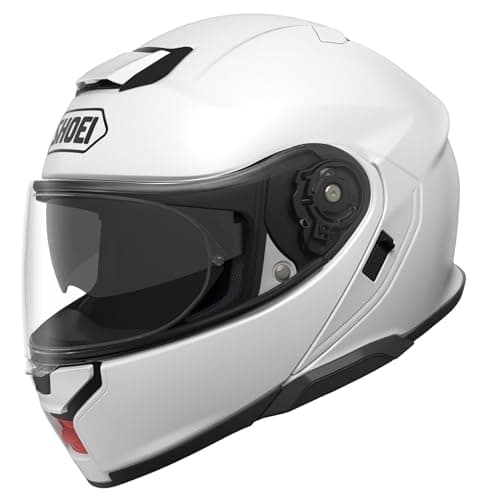
Shoei Neotec 3: modular that reduces wind noise
From Best modular motorcycle helmets for touring and commuting
 See price on AmazonAmazon
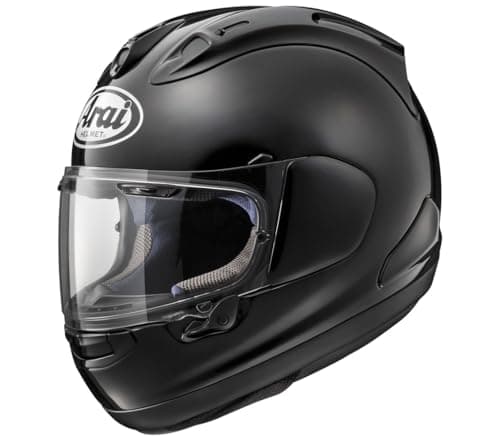
Arai Corsair-X: intermediate oval, PB-SNC2 shell