Explainer
How much does a motorcycle helmet weigh?
Published
Short answer
Most full face motorcycle helmets weigh roughly 1,300 to 1,700 grams (about 2.9 to 3.7 lb) in a medium. Modular and adventure helmets usually run heavier, often 1,700 to 2,000 grams or more, because of the chin bar hinge or peak. Open face helmets are the lightest. Carbon fiber shells typically save a couple of hundred grams over fiberglass or polycarbonate versions of the same design.
Gear for this job
All 8 picks compared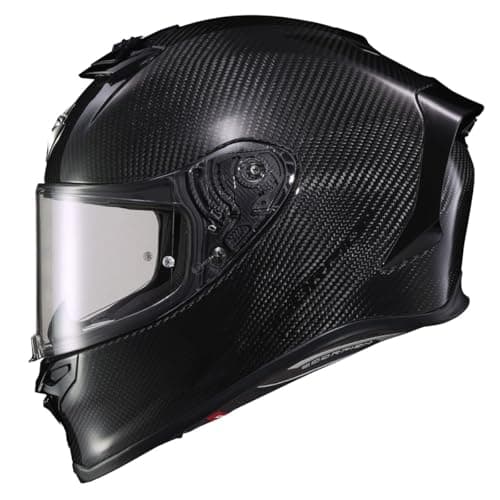
ScorpionEXO R1 Air Carbon: 1,383 g in medium
See price on AmazonSee it on Amazon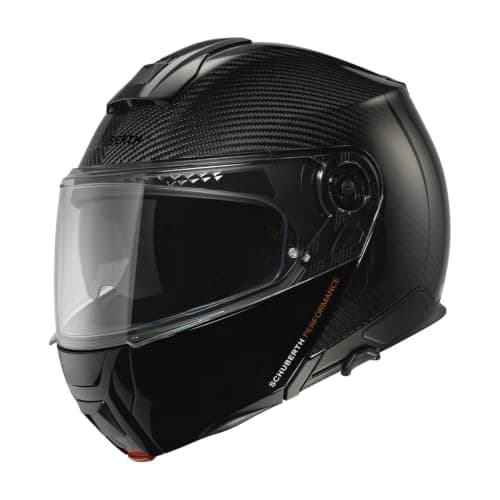
Schuberth C5 Carbon: modular at about 1,580-1,600 g
See price on AmazonSee it on Amazon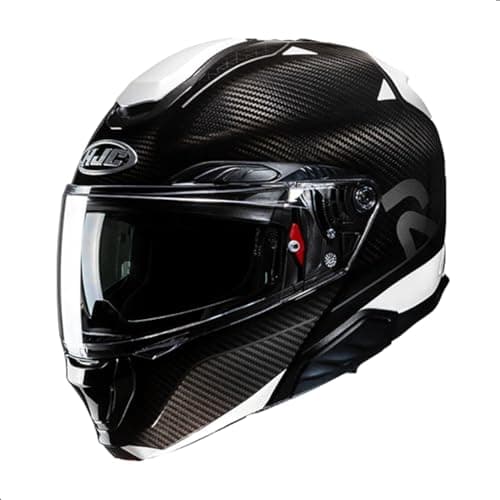
HJC RPHA 91 Carbon: modular with drop-down sun visor
See price on AmazonSee it on Amazon
Helmet weight is one of the specs riders ask about most, and one of the hardest to compare, because brands measure different sizes and some list a range. This page gives typical weight ranges by helmet type, explains what shell materials and shell sizes do to the number, and lists weights published by makers for several helmets we cover. It also explains why a heavier helmet can feel lighter on the road than a lighter one. If you are choosing a type first, start with how to choose a motorcycle helmet.
Typical motorcycle helmet weights by type
The figures below are typical ranges for adult helmets in a medium size. Individual models fall outside them, and larger sizes weigh more, especially when a bigger shell is used.
A US DOT compliant full face helmet is rarely much under about 1,200 grams. If a full face helmet weighs far less than that, check that it is genuinely certified; see our DOT label explainer.
Full face
Street, sport and touring
Modular
Touring, riders who wear glasses
Adventure
Mixed road and dirt
Open face (3/4)
Cruisers and scooters
Half
Short, slow rides
Off-road
Dirt and motocross, with goggles
Open face (3/4)
- Typical weight (g)
- 1,000 - 1,400
- Typical weight (lb)
- 2.2 - 3.1
Full face, carbon shell
- Typical weight (g)
- 1,250 - 1,500
- Typical weight (lb)
- 2.8 - 3.3
Full face, fiberglass or composite
- Typical weight (g)
- 1,350 - 1,700
- Typical weight (lb)
- 3.0 - 3.7
Full face, polycarbonate
- Typical weight (g)
- 1,450 - 1,750
- Typical weight (lb)
- 3.2 - 3.9
Modular (flip-up)
- Typical weight (g)
- 1,600 - 2,000
- Typical weight (lb)
- 3.5 - 4.4
Adventure / dual sport
- Typical weight (g)
- 1,500 - 2,000
- Typical weight (lb)
- 3.3 - 4.4
| Helmet type | Typical weight (g) | Typical weight (lb) |
|---|---|---|
| Open face (3/4) | 1,000 - 1,400 | 2.2 - 3.1 |
| Full face, carbon shell | 1,250 - 1,500 | 2.8 - 3.3 |
| Full face, fiberglass or composite | 1,350 - 1,700 | 3.0 - 3.7 |
| Full face, polycarbonate | 1,450 - 1,750 | 3.2 - 3.9 |
| Modular (flip-up) | 1,600 - 2,000 | 3.5 - 4.4 |
| Adventure / dual sport | 1,500 - 2,000 | 3.3 - 4.4 |
Listed weights of popular helmets
These weights come from the makers' own product listings. Note the size each figure refers to: some brands quote a medium, others give a range for a group of sizes. Schuberth, for example, lists one weight for XS to L and another for XL to 3XL because the larger sizes use a bigger shell.
ScorpionEXO Covert FX
- Type and shell
- Full face, TCT-Ultra composite
- Listed weight
- About 1,348 g / 2.9 lb (M)
ScorpionEXO R1 Air
- Type and shell
- Full face, Ultra-TCT composite
- Listed weight
- About 1,383 g / 3.05 lb (M)
Schuberth S3
- Type and shell
- Full face, DFP fiberglass
- Listed weight
- About 1,720 - 1,740 g (XS-L); 1,970 g (XL-3XL)
Schuberth C5 Carbon
- Type and shell
- Modular, carbon
- Listed weight
- About 1,580 - 1,600 g (XS-L); 1,770 g (XL-3XL)
Schuberth C5
- Type and shell
- Modular, DFP fiberglass
- Listed weight
- About 1,780 - 1,790 g (XS-L); 1,900 - 1,910 g (XL-3XL)
Shoei Hornet X2
- Type and shell
- Adventure
- Listed weight
- About 3.99 lb / 1,810 g (M)
ScorpionEXO AT960
- Type and shell
- Modular adventure, polycarbonate
- Listed weight
- About 1,858 g / 4.09 lb (M)
Schuberth E2
- Type and shell
- Modular adventure, DFP fiberglass
- Listed weight
- About 1,970 - 1,990 g (XS-L); 2,140 g (XL-3XL)
| Helmet | Type and shell | Listed weight |
|---|---|---|
| ScorpionEXO Covert FX | Full face, TCT-Ultra composite | About 1,348 g / 2.9 lb (M) |
| ScorpionEXO R1 Air | Full face, Ultra-TCT composite | About 1,383 g / 3.05 lb (M) |
| Schuberth S3 | Full face, DFP fiberglass | About 1,720 - 1,740 g (XS-L); 1,970 g (XL-3XL) |
| Schuberth C5 Carbon | Modular, carbon | About 1,580 - 1,600 g (XS-L); 1,770 g (XL-3XL) |
| Schuberth C5 | Modular, DFP fiberglass | About 1,780 - 1,790 g (XS-L); 1,900 - 1,910 g (XL-3XL) |
| Shoei Hornet X2 | Adventure | About 3.99 lb / 1,810 g (M) |
| ScorpionEXO AT960 | Modular adventure, polycarbonate | About 1,858 g / 4.09 lb (M) |
| Schuberth E2 | Modular adventure, DFP fiberglass | About 1,970 - 1,990 g (XS-L); 2,140 g (XL-3XL) |
Note.Brands weigh helmets in slightly different ways, with or without accessories such as a Pinlock insert, breath deflector or peak. Treat small differences of 50 grams or so as noise.
What makes one helmet heavier than another
Shell material. Polycarbonate (thermoplastic) shells are inexpensive to mold but usually need to be thicker, so they tend to be heavier. Fiberglass and composite shells layer fibers in resin and can be thinner for similar strength. Carbon fiber is the lightest common material for a given strength. Our guide to helmet shell materials goes deeper.
Number of shell sizes. A brand that makes three to five shell sizes can keep small helmets small. A helmet sold in XS to 3XL from just two shells means the small sizes carry a large shell with thick padding, which adds weight and bulk.
Features. A modular chin bar hinge, an internal drop-down sun visor, an adventure peak and integrated intercom electronics all add grams. A smart helmet with built-in speakers, battery and lights will usually weigh more than a plain helmet of the same shape.
Why a heavier helmet can feel lighter
Static weight on a scale is only part of the story. What your neck notices at speed is how the helmet behaves in the wind. A well-shaped shell that stays stable and does not lift or buffet can feel lighter at highway speed than a lighter helmet that catches air.
Balance matters too. A helmet whose weight sits close to your head's center feels lighter than one with weight hanging out at the front, such as a modular chin bar or a large peak. Fit plays a part: a helmet that moves on your head makes your neck work to keep it steady. That is why fit and shape should come before weight when you choose; see how a motorcycle helmet should fit.
Which motorcycle helmets are the lightest?
The lightest full face road helmets are usually carbon fiber or high-end composite models. Racing helmets such as AGV's Pista GP RR use full carbon shells and multiple shell sizes. Carbon versions of touring helmets, such as the Schuberth C5 Carbon, trim weight compared with their fiberglass siblings.
If weight is your top priority, look at our carbon fiber helmet guide. Open face helmets are lighter still, but give up chin and face protection; compare them in motorcycle helmet types.
What about Arai, Shoei and other premium brands?
Premium brands generally fall within the composite full face range above, and their exact weights vary by model and size. Arai, for example, uses its own fiber laminate shells and offers several shell sizes on many models, and Shoei uses its AIM and AIM+ multi-fiber shells. Brands do not always publish weights in the US listing, so check the maker's specification page for the model and size you want.
Comparing brands by weight alone can mislead. A slightly heavier helmet that fits your head shape will usually be more comfortable over a long day than a lighter one that creates hot spots. See are Arai helmets safer and our Arai and Shoei guides for lineup details.
Frequently asked questions
Is a 4 lb motorcycle helmet heavy? At about 1,800 grams, 4 lb is typical for a modular or adventure helmet and on the heavy side for a full face. Many riders tour comfortably in helmets around this weight when the fit is good.
Do lighter helmets protect less? Not necessarily. Weight depends mainly on shell material and features. Every helmet sold for US road use must meet the same minimum standard regardless of weight.
Does helmet weight cause neck pain? It can contribute on long rides, but wind buffeting, poor fit and riding position often matter more. A stable, well-fitted helmet reduces neck strain.
How much does a carbon fiber helmet save? Carbon versions of the same helmet are commonly a couple of hundred grams lighter. For example, Schuberth lists the C5 Carbon about 200 grams under the fiberglass C5 in sizes XS to L.
What you need for this
- See price on AmazonAmazon
ScorpionEXO R1 Air Carbon: 1,383 g in medium
From Best carbon fiber motorcycle helmets, with listed weights
 See price on AmazonAmazon
Shoei RF-1400: quieter shell, SNELL M2020 and DOT
From Best full face motorcycle helmets for street and sport touring
 See price on AmazonAmazon
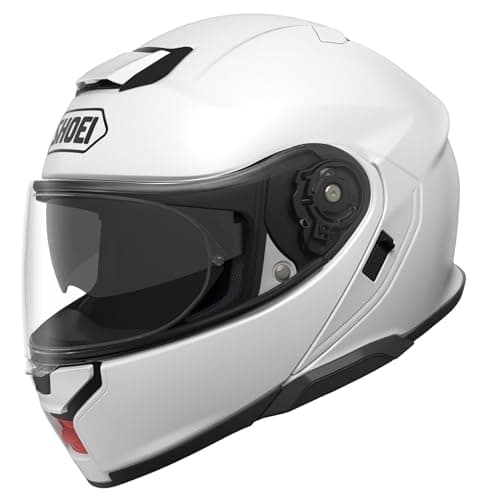
Shoei Neotec 3: modular that reduces wind noise
From Best modular motorcycle helmets for touring and commuting
 See price on AmazonAmazon
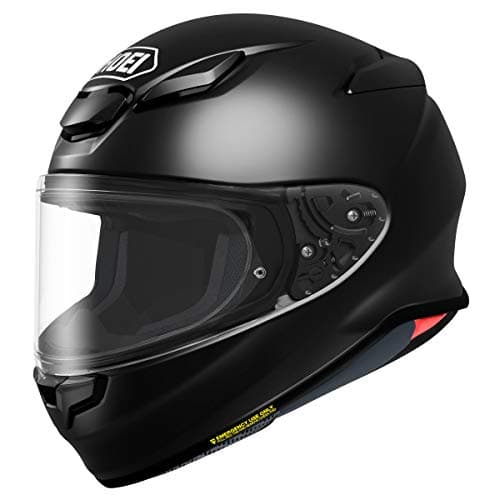
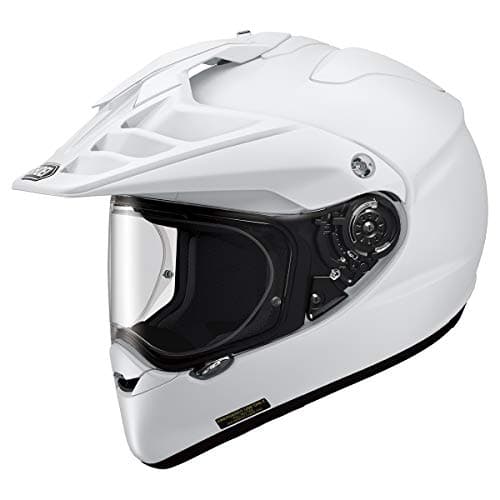
Shoei Hornet X2: Snell M2020D, 3.99 lbs in medium
From Best adventure and dual sport helmets for road and dirt