Comparison
Full face vs modular helmet
Published
Short answer
A modular helmet has a chin bar that flips up, so you can talk, drink or put on glasses without taking it off. A full face has a fixed chin bar, which is simpler, usually lighter and is the standard choice for sport and track riding. Choose a modular for touring and convenience, and a full face if you want the lightest, simplest shell.
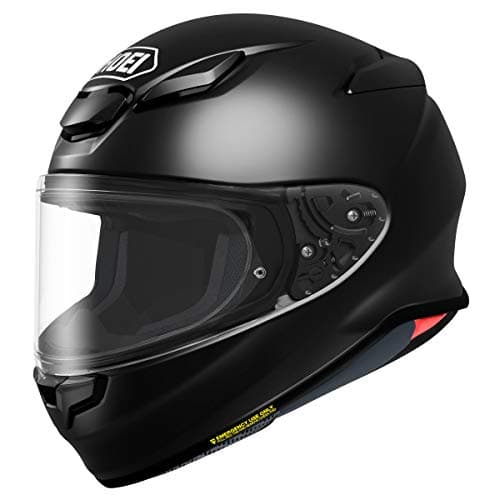
Shoei
Shoei RF-1400: quieter shell, SNELL M2020 and DOT
See price on Amazon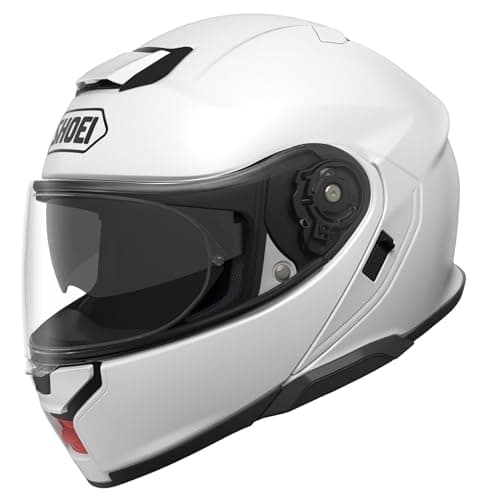
Shoei
Shoei Neotec 3: modular that reduces wind noise
See price on Amazon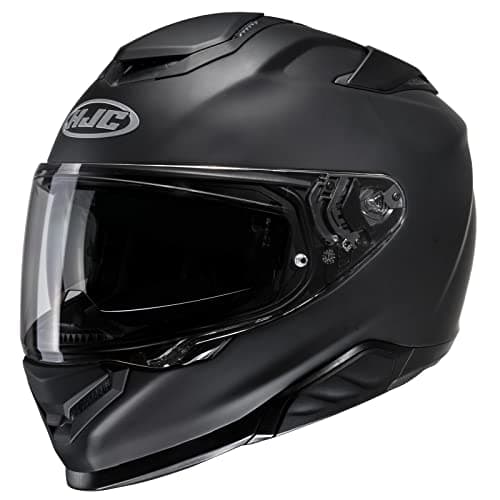
HJC
HJC RPHA 71: carbon matrix touring full face
See price on Amazon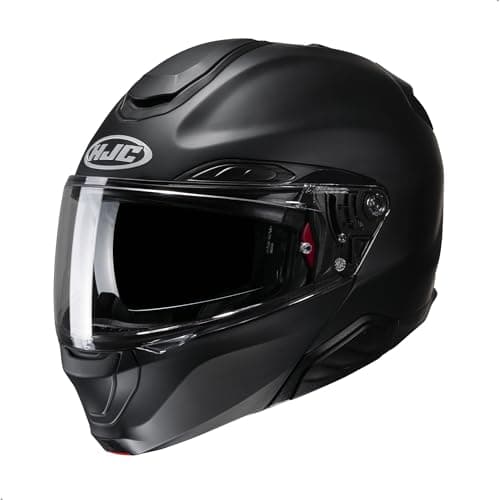
HJC
HJC RPHA 91: carbon hybrid modular, 5 intakes
See price on Amazon
- Shoei RF-1400: quieter shell, SNELL M2020 and DOT
- Certification
- SNELL M2020 and DOT
- Shell material
- Fiberglass and organic fiber matrix
- Weight
- Not stated
- Sizes
- Not stated
- Shoei Neotec 3: modular that reduces wind noise
- Certification
- DOT FMVSS 218
- Shell material
- AIM shell, multi-density EPS
- Weight
- Not stated
- Sizes
- Not stated
- HJC RPHA 71: carbon matrix touring full face
- Certification
- DOT FMVSS 218
- Shell material
- Premium Integrated Matrix EVO Carbon
- Weight
- Not stated
- Sizes
- Large (this listing)
- HJC RPHA 91: carbon hybrid modular, 5 intakes
- Certification
- DOT FMVSS 218
- Shell material
- Carbon and carbon-glass hybrid fiber
- Weight
- Not stated
- Sizes
- Large (this listing)
| Pick | Certification | Shell material | Weight | Sizes | Price | Link |
|---|---|---|---|---|---|---|
| Shoei RF-1400: quieter shell, SNELL M2020 and DOT | SNELL M2020 and DOT | Fiberglass and organic fiber matrix | Not stated | Not stated | - | Amazon |
| Shoei Neotec 3: modular that reduces wind noise | DOT FMVSS 218 | AIM shell, multi-density EPS | Not stated | Not stated | - | Amazon |
| HJC RPHA 71: carbon matrix touring full face | DOT FMVSS 218 | Premium Integrated Matrix EVO Carbon | Not stated | Large (this listing) | - | Amazon |
| HJC RPHA 91: carbon hybrid modular, 5 intakes | DOT FMVSS 218 | Carbon and carbon-glass hybrid fiber | Not stated | Large (this listing) | - | Amazon |
Facts are taken from each Amazon listing. Prices are checked daily and shown with their date.
Verdict
Buy a full face such as the Shoei RF-1400 or HJC RPHA 71 if you want the simplest, lightest and cheapest shell, especially for sport riding. Buy a modular such as the Shoei Neotec 3 or HJC RPHA 91 if you tour, wear glasses or stop often, and check the label for an ECE P or P/J rating.
This page is for riders deciding between a one piece full face helmet and a flip-up modular. We explain what a modular helmet is, then compare weight, noise, chin bar strength and ratings, ventilation and day to day convenience. To keep it concrete, we use matched pairs from the same makers: the Shoei RF-1400 and Neotec 3, the HJC RPHA 71 and RPHA 91, and the Schuberth S3 and C5, which list their weights. All product facts come from the listings.
What is a modular motorcycle helmet?
A modular, also called a flip-up or flip-front helmet, looks like a full face when closed. A hinge on each side lets the chin bar and face shield lift up over the forehead, turning it into something close to an open face helmet. The Neotec 3 listing describes this as a flip-up face cover and face shield for switching between full face and open face riding.
A full face helmet has a chin bar molded into the shell. There is no hinge and no latch. It is the most common helmet for sport riding and for many road riders. Our helmet types guide covers open face, adventure and half helmets as well.
Full face
Street, sport and touring
Modular
Touring, riders who wear glasses
Adventure
Mixed road and dirt
Open face (3/4)
Cruisers and scooters
Half
Short, slow rides
Off-road
Dirt and motocross, with goggles
Weight
A modular needs hinges, a chin bar latch and extra reinforcement, so it is usually heavier than a full face from the same maker. Schuberth lists weights for both types, which makes a fair comparison. The S3 full face is about 3.8 lb (1720 to 1740 g) in sizes XS to L, and the C5 modular is about 3.9 lb (1780 to 1790 g) in the same sizes. That is a small gap for a premium pair; across the market the difference varies by model.
Shoei and HJC listings here do not state weights, so we do not compare them on weight. For more on why grams matter over a long day, read motorcycle helmet weight.
Chin bar strength and P/J ratings
In the US, DOT FMVSS 218 is the legal standard, and every helmet in this comparison lists it. DOT does not include a separate chin bar test. Under the European ECE 22.06 standard, a modular can be approved as P (protective, tested as a full face with the chin bar closed), J (jet, tested as an open face), or P/J, which means it is approved for riding with the chin bar either closed or locked open.
The modular listings in this comparison state DOT only and do not state a P or J rating. If chin bar protection matters to you, look for the ECE label on the helmet itself and check for P or P/J. Never ride with the chin bar open on a helmet that is not approved for it. Our ECE 22.06 explainer and DOT vs ECE vs Snell pages cover the tests, and the helmet rating decoder reads a label for you.
Note.A full face chin bar is one piece with the shell. A modular chin bar depends on its latch being fully closed. Check the latch every time you close it.
Matched pairs compared
Facts from the listings only. 'Not stated' means the listing does not say.
Type
- Shoei RF-1400
- Full face
- Shoei Neotec 3
- Modular
- HJC RPHA 71
- Full face
- HJC RPHA 91
- Modular
Listing price
- Shoei RF-1400
- $549.99
- Shoei Neotec 3
- $949.99
- HJC RPHA 71
- $349.99
- HJC RPHA 91
- $559.99
Shell
- Shoei RF-1400
- AIM matrix
- Shoei Neotec 3
- AIM, multi-density EPS
- HJC RPHA 71
- Integrated Matrix EVO Carbon
- HJC RPHA 91
- Carbon and carbon-glass hybrid
Rating stated
- Shoei RF-1400
- DOT, Snell M2020
- Shoei Neotec 3
- DOT FMVSS 218
- HJC RPHA 71
- DOT FMVSS 218
- HJC RPHA 91
- DOT FMVSS 218
Sun visor
- Shoei RF-1400
- Not stated
- Shoei Neotec 3
- QSV-2
- HJC RPHA 71
- 3-step sun shield
- HJC RPHA 91
- 3-step sun visor
Vents stated
- Shoei RF-1400
- Multiple
- Shoei Neotec 3
- Multiple
- HJC RPHA 71
- 2 intakes, 2 exhausts
- HJC RPHA 91
- 5 intakes, 7 exhausts
Intercom ready
- Shoei RF-1400
- Not stated
- Shoei Neotec 3
- Not stated
- HJC RPHA 71
- SMART HJC 21B, 50B
- HJC RPHA 91
- SMART HJC 21B, 50B
| Spec | Shoei RF-1400 | Shoei Neotec 3 | HJC RPHA 71 | HJC RPHA 91 |
|---|---|---|---|---|
| Type | Full face | Modular | Full face | Modular |
| Listing price | $549.99 | $949.99 | $349.99 | $559.99 |
| Shell | AIM matrix | AIM, multi-density EPS | Integrated Matrix EVO Carbon | Carbon and carbon-glass hybrid |
| Rating stated | DOT, Snell M2020 | DOT FMVSS 218 | DOT FMVSS 218 | DOT FMVSS 218 |
| Sun visor | Not stated | QSV-2 | 3-step sun shield | 3-step sun visor |
| Vents stated | Multiple | Multiple | 2 intakes, 2 exhausts | 5 intakes, 7 exhausts |
| Intercom ready | Not stated | Not stated | SMART HJC 21B, 50B | SMART HJC 21B, 50B |
Noise, convenience and cost
Hinges and seams around the chin bar give a modular more places for air to sneak in. Makers work hard on sealing, and the Neotec 3 listing claims wind tunnel shaping to cut noise, but a well fitted full face has fewer joints. The quietest choice still depends most on fit and your bike's airflow; see helmet wind noise fixes.
Convenience is where modulars win. You can flip up to pay for fuel, talk at a stop, drink water or put on glasses without taking the helmet off, which helps riders who wear glasses (see motorcycle helmets with glasses). Touring riders and commuters who stop often get the most from that.
Modulars cost more. Shoei's Neotec 3 lists $400 above the RF-1400, and HJC's RPHA 91 lists about $210 above the RPHA 71. You are paying for the mechanism.
- Choose a modular if you tour, stop often, wear glasses or want an easier fit over your head.
- Choose a full face if you ride sport bikes or track days, want the simplest shell and lowest price, or want the fewest seams.
Frequently asked questions
Is a modular helmet as safe as a full face? A modular with the chin bar latched is tested as a full face under ECE when it carries a P rating. DOT does not test chin bars separately. A full face has no hinge, so it avoids any latch concerns.
Are modular helmets heavier? Usually. Schuberth's listings show the C5 modular at about 3.9 lb and the S3 full face at about 3.8 lb in sizes XS to L.
Can I ride with a modular open? Only if the helmet is approved for it, shown as J or P/J on the ECE label. The US listings here do not state that, so check the helmet.
What is a modular helmet good for? Touring, commuting, riders who wear glasses, and anyone who wants to talk or drink at stops without removing the helmet.
What you need for this
- See price on AmazonAmazon
Shoei Neotec 3: modular that reduces wind noise
From Best modular motorcycle helmets for touring and commuting
- See price on AmazonAmazon
Shoei RF-1400: quieter shell, SNELL M2020 and DOT
From Best full face motorcycle helmets for street and sport touring