Explainer
Shoei helmet size chart and shell sizes
Published
Short answer
Shoei's adult sizes typically run XS 53 to 54 cm, S 55 to 56 cm, M 57 to 58 cm, L 59 to 60 cm, XL 61 to 62 cm and XXL 63 to 64 cm, with some models offering extra sizes at either end. Each model uses several shell sizes so small and large helmets stay in proportion, and Shoei sells cheek pads and center pads in different thicknesses to fine-tune fit. Always confirm on the chart for the exact model you want.
Gear for this job
All 6 picks compared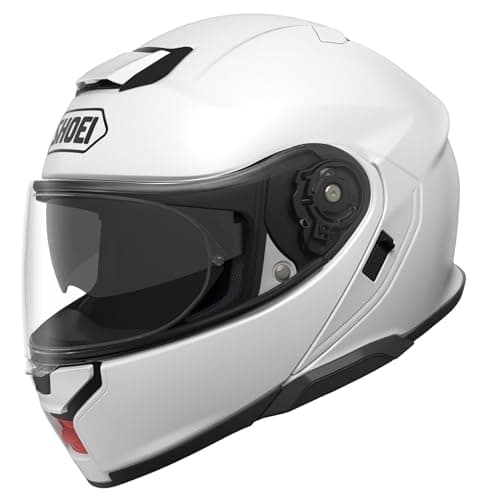
Shoei Neotec 3: flip-up modular with sun visor
See price on AmazonSee it on Amazon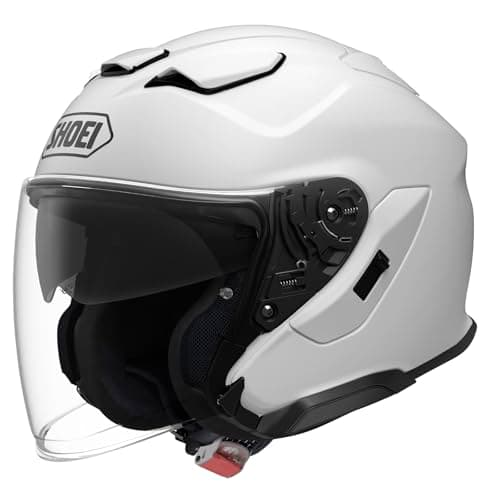
Shoei J-Cruise 3: open face, ECE 22.06 listed
See price on AmazonSee it on Amazon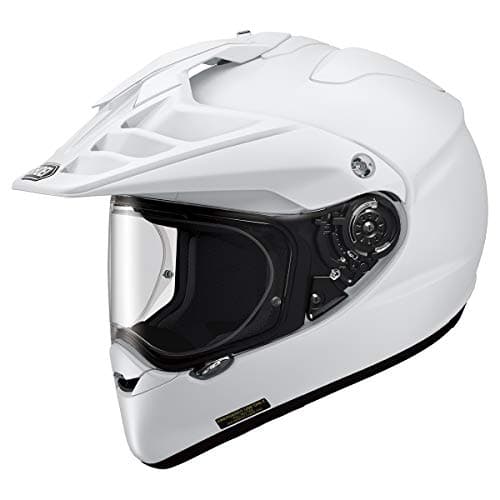
Shoei Hornet X2: adventure, Snell M2020D, 3.99 lb
See price on AmazonSee it on Amazon
Shoei is one of the most popular premium helmet brands in the US, and riders often ask whether Shoei runs small, large or true to size. This page lays out Shoei's typical size chart, explains how shell sizes work across models like the RF-1400, GT-Air 3, Neotec 3 and Hornet X2, and shows how swapping pads changes fit without changing size. It is for anyone ordering a Shoei online or comparing one with an Arai or Schuberth. If you are new to sizing, start by measuring your head with our helmet size finder.
Shoei size chart
The table shows Shoei's typical adult sizing. Shoei sizes in centimeters, so measure your head in centimeters around the widest point, about an inch above the eyebrows and just over the tops of the ears. Not every model is made in every size, and some ranges vary slightly by model, so check the chart on the product page for the helmet you want.
Shoei helmets are generally described as an intermediate oval shape, which suits the most common head shape in North America. If you have a long oval head, compare with Arai's size chart, as some Arai models are built longer front to back.
- Widest point: about 1 inch (2.5 cm) above the eyebrows, just above the ears.
- Tape level all the way round, snug, not tight. Keep the largest of three readings.
XS
- Head (cm)
- 53 - 54
- Head (in)
- 20.9 - 21.3
S
- Head (cm)
- 55 - 56
- Head (in)
- 21.7 - 22.0
M
- Head (cm)
- 57 - 58
- Head (in)
- 22.4 - 22.8
L
- Head (cm)
- 59 - 60
- Head (in)
- 23.2 - 23.6
XL
- Head (cm)
- 61 - 62
- Head (in)
- 24.0 - 24.4
XXL
- Head (cm)
- 63 - 64
- Head (in)
- 24.8 - 25.2
| Shoei size | Head (cm) | Head (in) |
|---|---|---|
| XS | 53 - 54 | 20.9 - 21.3 |
| S | 55 - 56 | 21.7 - 22.0 |
| M | 57 - 58 | 22.4 - 22.8 |
| L | 59 - 60 | 23.2 - 23.6 |
| XL | 61 - 62 | 24.0 - 24.4 |
| XXL | 63 - 64 | 24.8 - 25.2 |
What shell sizes are and why they matter
The size on the label is the inside fit. The outer shell is a separate thing. A brand can make every size from one shell and use thicker EPS and padding for smaller heads, or it can make several shells so a small helmet is genuinely small. Shoei uses multiple shell sizes across its premium full face, modular and adventure helmets.
More shell sizes keep the helmet compact and light for smaller riders and avoid a bulky look. They also mean the EPS liner thickness stays closer to the designer's target in every size. When two adjacent sizes share a shell, the smaller one simply has thicker liners inside.
- Shell count varies by model, so check the specification page for the helmet you want.
- Sizes sharing a shell can feel similar in bulk but fit differently inside.
- Liner and pad sizes are matched to each helmet size, not each shell.
Shoei models and how they fit
Within the brand, most Shoei road helmets share a similar intermediate oval interior, so a rider who fits one usually fits the others in the same size. Differences come from the type of helmet. A modular like the Neotec 3 has a hinge and chin bar mechanism that can change how the cheek pads feel. An adventure helmet like the Hornet X2 has a larger eye port. The race-focused X-Fifteen is built for a tucked riding position, so it can feel different when you sit upright.
If you already own a Shoei and it fits well, the same size in another Shoei is a strong starting point. Read our comparisons for more on individual models: RF-1400 vs RF-SR, GT-Air 3 vs RF-1400 and Neotec 2 vs Neotec 3.
RF-1400
- Type
- Full face
- Typical use
- Street and sport touring
GT-Air 3
- Type
- Full face with sun visor
- Typical use
- Touring and commuting
X-Fifteen
- Type
- Full face, race
- Typical use
- Track and aggressive sport riding
Neotec 3
- Type
- Modular
- Typical use
- Touring, glasses wearers
Hornet X2
- Type
- Adventure
- Typical use
- Dual sport and adventure touring
J-Cruise II / J-Cruise 3
- Type
- Open face with sun visor
- Typical use
- Cruising and city riding
| Model | Type | Typical use |
|---|---|---|
| RF-1400 | Full face | Street and sport touring |
| GT-Air 3 | Full face with sun visor | Touring and commuting |
| X-Fifteen | Full face, race | Track and aggressive sport riding |
| Neotec 3 | Modular | Touring, glasses wearers |
| Hornet X2 | Adventure | Dual sport and adventure touring |
| J-Cruise II / J-Cruise 3 | Open face with sun visor | Cruising and city riding |
Fine-tuning fit with cheek pads and center pads
Shoei sells replacement cheek pads and center pads (the crown liner) in several thicknesses for many models. Thinner cheek pads relieve jaw and cheek pressure; thicker ones take up space if the helmet moves. A thinner or thicker center pad raises or lowers the helmet on your head, which changes where the eye port sits and how the crown feels.
Shoei also offers a fitting service through certified dealers, where staff measure your head and swap pads to suit. If you have a Shoei that is close but not quite right, a pad swap is usually a better fix than changing size.
- 1
Wear the helmet for 20 to 30 minutes and note exactly where you feel pressure or looseness.
- 2
Cheek pressure only: try the next thinner cheek pads for your model.
- 3
Helmet sits too low over your eyes: try a thicker center pad.
- 4
Pressure on the crown: try a thinner center pad.
- 5
Pressure on the forehead or temples: this is shape, not padding, so consider another model or brand.
Note.Only use pads made for your exact model and size. Never trim the EPS liner to make room.
Does Shoei run small or large?
Shoei generally runs true to its own chart, and most riders who measure carefully end up in the size the chart suggests. Where riders get caught out is head shape. A round oval head may feel tight at the temples in a Shoei sized correctly by circumference, while a long oval head may feel pressure at the forehead.
If you are between sizes, try both if you can. Most riders settle in the smaller one, since pads compress with use. For more help, see motorcycle helmet too tight and how a motorcycle helmet should fit.
Frequently asked questions
What size Shoei for a 58 cm head? 58 cm sits at the top of Shoei's medium range on the typical chart. Try a medium first, and a large if the medium causes a pressure point after 20 to 30 minutes.
Do Shoei and Arai sizes match? Both size in centimeters with similar ranges, but the internal shapes differ by model. Use each brand's chart and try both if you can.
Can I buy different cheek pads for my Shoei? Yes, for many models Shoei sells cheek pads and center pads in several thicknesses through dealers.
Is the Shoei size chart the same for every model? The size ranges are broadly the same, but not every model is offered in every size. Always check the model's own chart.
What you need for this
- See price on AmazonAmazon
Shoei Neotec 3: modular that reduces wind noise
 See price on AmazonAmazon
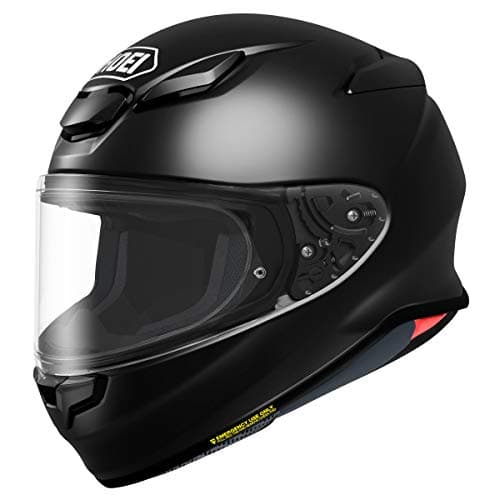
Shoei RF-1400: quieter shell, SNELL M2020 and DOT
From Best full face motorcycle helmets for street and sport touring