How-to
How should a motorcycle helmet fit?
Published
Short answer
A motorcycle helmet should fit snugly with even pressure around the whole head, firm contact on the cheeks, and no hot spots on the forehead or sides. With the strap fastened, it should not roll forward off your head or shift when you twist it. A new helmet should feel slightly tight, because the comfort liner compresses with use.
Gear for this job
All 8 picks compared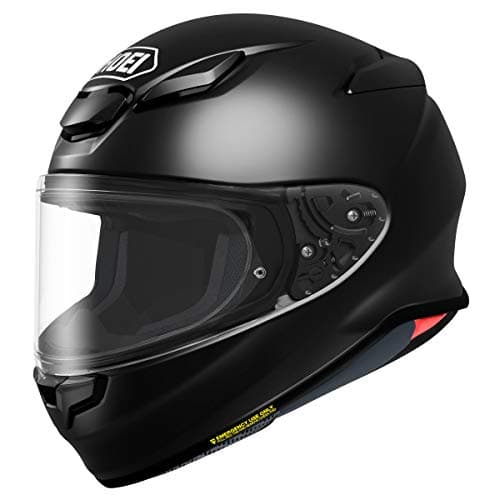
Shoei RF-1400: Snell M2020 and DOT listed
See price on AmazonSee it on Amazon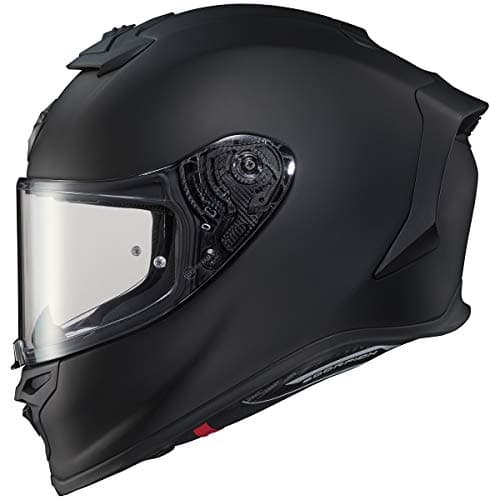
Scorpion EXO-R1 Air: DOT and ECE, 3.05 lb
See price on AmazonSee it on Amazon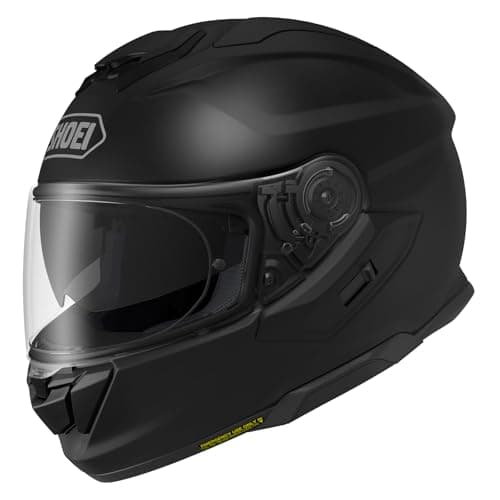
Shoei GT-Air 3: touring full face with sun visor
See price on AmazonSee it on Amazon
This page is for riders buying a new helmet or wondering whether the one they own is the right size. A helmet only protects you properly if it stays in place during a crash, and fit is what keeps it there. Below you will find how to size a helmet, what snug should actually feel like, the roll-off and twist tests, how to spot pressure points in the first 30 minutes, and the signs that you need a different size or a different head shape rather than a different brand.
Start with your head size and shape
Measure the circumference of your head about one inch above your eyebrows and just above your ears, at the widest point. Use a soft tailor's tape and take the measurement two or three times. Our guide on how to measure your head for a helmet walks through it, and the helmet size finder turns the number into a size range.
Size is only half of it. Helmets are built around an internal head shape: long oval, intermediate oval or round oval. A helmet in the right size but the wrong shape will press hard on the forehead and back, or on the sides, while leaving gaps elsewhere. Most mainstream helmets sold in the US are intermediate oval. If every helmet you try hurts in the same spot, read about motorcycle helmet head shapes before you size up.
- Widest point: about 1 inch (2.5 cm) above the eyebrows, just above the ears.
- Tape level all the way round, snug, not tight. Keep the largest of three readings.
What a correct fit feels like
When you first pull the helmet on, it should take a little effort to get past your ears. Once it is on, the crown liner should contact the top of your head and the pads should feel evenly firm around the sides, front and back. Your cheeks should be pushed up slightly, enough that you might bite the inside of your cheek if you try to chew.
Look straight ahead. The top of the eye port should sit just above your eyebrows, and your field of view should be clear to both sides. If you can see the brow of the helmet edge across the top of your vision, the helmet may be sitting too low, which often means it is too big.
- Even, firm pressure all the way around, not one tight spot
- Cheek pads pressing on your cheeks, not just touching them
- Eyebrows near the top edge of the eye port
- No gap you can slide a finger into at the temples or brow
- Comfortable enough that you are not counting the minutes
The roll-off and twist tests
Fasten the chin strap snugly, then do these checks. They take a minute and tell you more than any size chart. If the helmet fails either one, it is too big, even if it feels comfortable.
Do not skip the strap. Every test of helmet movement assumes the retention system is fastened as you would ride. See how to put on and fasten a motorcycle helmet if you are unsure how tight the strap should be.
- 1
Fasten the strap so only one or two fingers fit between the strap and your chin.
- 2
Grab the chin bar and try to rotate the helmet left and right. Your skin and cheeks should move with it. If the helmet slides over your skin, it is loose.
- 3
Push the chin bar up and down. Your eyebrows and forehead skin should move with the helmet.
- 4
Reach behind your head, grip the bottom rear edge of the shell and pull it up and forward. The helmet should not roll off over your forehead.
- 5
Shake your head firmly. The helmet should move with your head, not after it.
Watch for pressure points in the first 30 minutes
Snug is good. Painful is not. Wear the helmet indoors for 20 to 30 minutes, strap fastened, while you read or watch something. A helmet that feels fine for two minutes can develop a hot spot that turns into a headache on a long ride.
When you take it off, look in a mirror. A red mark on the forehead or at the sides that fades quickly is normal. A sharp, sore spot that lingers usually means the helmet shape does not match your head. Forehead pressure points often point to a head that is longer front to back than the helmet; side pressure points to a rounder head. The fix is a different shape, not a bigger size, because a bigger size will be loose elsewhere.
Even snug pressure, cheeks pushed up
- What it usually means
- Correct fit
- What to try
- Keep it
Hot spot on the forehead only
- What it usually means
- Head longer than the helmet shape
- What to try
- Try a longer oval model
Hot spots on both sides
- What it usually means
- Head rounder than the helmet shape
- What to try
- Try a rounder model
Helmet moves when you twist it
- What it usually means
- Too large
- What to try
- Size down or thicker pads
Pressure everywhere, pain within minutes
- What it usually means
- Too small
- What to try
- Size up
Snug crown but loose cheeks
- What it usually means
- Cheek pads too thin
- What to try
- Ask for thicker cheek pads
| What you feel | What it usually means | What to try |
|---|---|---|
| Even snug pressure, cheeks pushed up | Correct fit | Keep it |
| Hot spot on the forehead only | Head longer than the helmet shape | Try a longer oval model |
| Hot spots on both sides | Head rounder than the helmet shape | Try a rounder model |
| Helmet moves when you twist it | Too large | Size down or thicker pads |
| Pressure everywhere, pain within minutes | Too small | Size up |
| Snug crown but loose cheeks | Cheek pads too thin | Ask for thicker cheek pads |
Note.Never ride in a helmet that rolls off or twists freely, even if it is comfortable. A loose helmet can shift or come off in a crash.
Break-in, cheek pads and fine tuning
Comfort liners and cheek pads compress over the first rides. That is why a new helmet should start out slightly tight. A helmet that is perfectly comfortable on day one may become loose after some weeks of riding. The EPS foam liner underneath does not compress in normal use, so pain that comes from the shell shape will not break in.
Many premium helmets from brands like Shoei and Arai offer cheek pads and crown liners in several thicknesses, sold separately or swapped by a dealer. This lets you keep a shell that suits your head shape while tuning the snugness. If the fit is close but not perfect, ask about pads before you change sizes. If a helmet feels too tight across the board, our page on a motorcycle helmet that is too tight explains what will and will not loosen.
Choosing a helmet that fits
Try on more than one brand if you can. Brand sizing differs, and so do internal shapes. Look at the brand's own size chart, such as the Shoei helmet size chart or the Arai helmet size chart, rather than going by your size in another brand.
Once you know your size and shape, the best full face motorcycle helmets guide lists models across shapes and budgets. If you wear glasses, check how the helmet works with your frames before you buy; see wearing a motorcycle helmet with glasses.
Frequently asked questions
Should a motorcycle helmet be snug? Yes. It should be snug enough that your cheeks move with the helmet when you twist it, but without sharp pressure points. Expect it to loosen a little as the liner breaks in.
How do I know if my helmet is too big? If the helmet rotates over your skin, rolls forward when pulled from the back, or lets you slide a finger in at the brow, it is too big. A loose helmet can come off or shift in a crash.
What if I am between two sizes? Try both on for 20 to 30 minutes. Many riders end up in the smaller size because pads compress, but only if the smaller one has no painful hot spots.
Can I fix a loose helmet with thicker pads? Often, yes, if the shell shape suits you. Many brands sell thicker cheek pads and crown liners. If the helmet is more than one size too big, replace it instead.
What you need for this
- See price on AmazonAmazon
Shoei RF-1400: quieter shell, SNELL M2020 and DOT
From Best full face motorcycle helmets for street and sport touring
 See price on AmazonAmazon
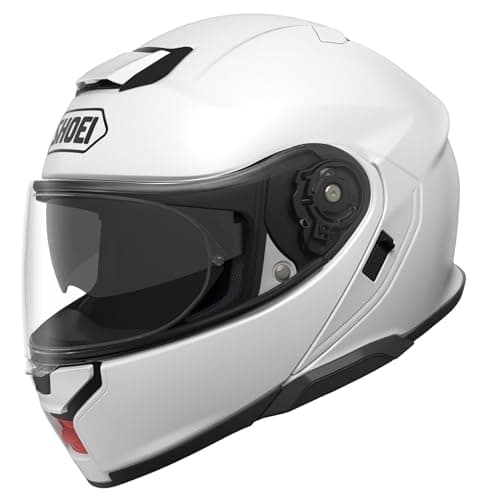
Shoei Neotec 3: modular that reduces wind noise
From Best modular motorcycle helmets for touring and commuting
 See price on AmazonAmazon
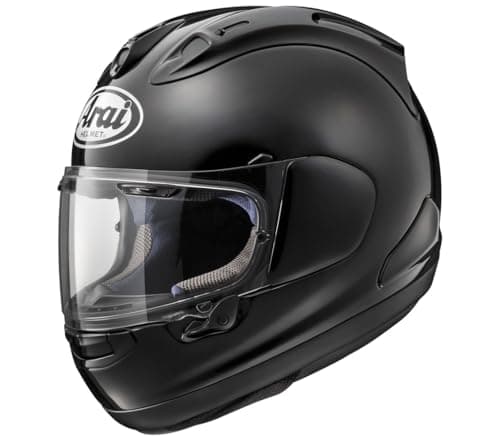
Arai Corsair-X: intermediate oval, PB-SNC2 shell