Explainer
MIPS and rotational systems in motorcycle helmets
Published
Short answer
MIPS (Multi-directional Impact Protection System) is a thin low-friction layer inside the helmet that lets the shell and liner move a few millimeters relative to the head in an angled impact. It is designed to help reduce the rotational forces that can result from certain impacts. Bell uses MIPS in models such as the Qualifier DLX MIPS, MX-9 Adventure MIPS and Lithium MIPS, and ECE 22.06 now includes an oblique impact test that measures rotation.
Gear for this job
All 7 picks compared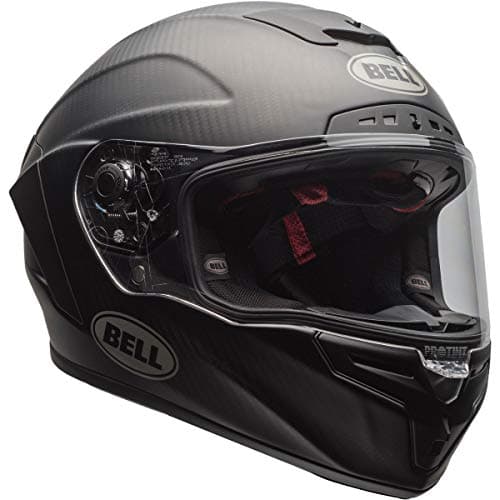
Bell Race Star DLX Flex: 3K carbon, 5 shell sizes
See price on AmazonSee it on Amazon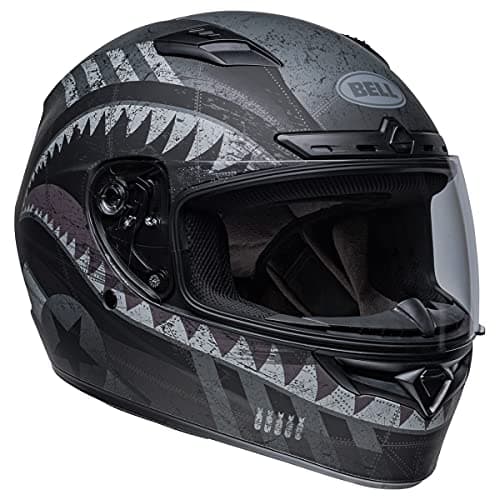
Bell Qualifier DLX MIPS: MIPS full face near $200
See price on AmazonSee it on Amazon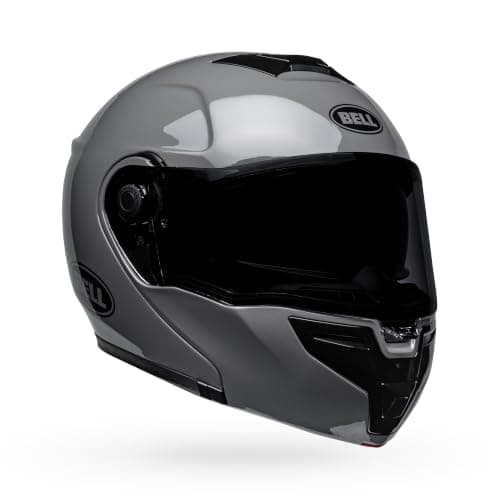
Bell SRT Modular: fiberglass flip-up for touring
See price on AmazonSee it on Amazon
Most crashes do not hit the helmet dead straight. The head usually meets the ground at an angle, which adds a twisting, rotational motion on top of the straight-line impact. Rotational systems like MIPS are designed with that in mind. This page explains how a slip-plane liner works, how it differs from systems some brands build into the EPS itself, which helmets we cover include one, and how the newer ECE 22.06 regulation tests for rotation. It is for riders comparing helmets who keep seeing MIPS on the spec sheet and want to know what it actually is.
Linear and rotational impacts
Traditional helmet tests drop a helmet straight onto an anvil and measure the straight-line, or linear, acceleration that reaches the head form. The EPS foam liner is designed to crush and spread that energy out over a longer time. Every DOT and ECE helmet is built to manage linear impacts.
In a real crash, a rider is usually moving forward as well as falling. When the helmet strikes the road at an angle, friction grabs the shell and the head is twisted. Researchers in head injury have long identified rotational motion as relevant to some types of brain injury. Rotational systems aim to reduce how much of that twist is passed on to the head.
- 1Shell outer layer that spreads an impact and resists abrasion
- 2EPS liner expanded polystyrene foam that crushes to absorb impact
- 3Comfort liner removable, washable fabric layer against the head
- 4Cheek pad sets how snug the helmet sits on the face
- 5Chin bar fixed front section of a full face helmet
- 6Visor clear or tinted shield over the eye port
- 7Visor pivot mount the visor swings on, removable for cleaning
- 8Vents intakes on the chin bar and crown, exhausts at the back
- 9Chin curtain cuts wind and noise under the chin
- 10D-ring strap retention strap fastened through two metal rings
How a MIPS slip-plane liner works
MIPS is a Swedish company that licenses its system to helmet makers. The best-known form is a thin, low-friction plastic layer that sits between the comfort liner and the EPS. It is attached with elastic anchors that let it slide a short distance in any direction.
In an angled impact, the outer helmet can rotate slightly relative to the head while the low-friction layer moves with the head. That relative movement of a few millimeters is designed to redirect some of the rotational energy. You can often spot a MIPS layer as a thin yellow or colored liner visible inside the helmet, along with a small MIPS logo on the shell or label.
- It does not replace the EPS liner. The helmet still relies on EPS for linear impacts.
- It adds very little weight.
- It should move slightly when you push it with your fingers. That is normal.
- It should not be removed or modified.
Note.Bell's listings describe MIPS as designed to help reduce rotational forces that can result from certain impacts. No helmet or system can prevent all injuries, and a rotational system does not change how a helmet should fit.
Motorcycle helmets that use MIPS
MIPS is more common in bicycle and snow helmets than in motorcycle helmets, but several motorcycle makers now use it. Among the helmets in our guides, Bell uses MIPS across part of its street and adventure range. The model name usually includes MIPS, which makes it easy to spot.
Bell Qualifier DLX MIPS
- Type
- Full face
- Notes from the listing
- Mips energy management system, removable washable liner
Bell MX-9 Adventure MIPS
- Type
- Adventure / dual sport
- Notes from the listing
- Mips slip-plane, 3 shell sizes
Bell Lithium MIPS
- Type
- Full face
- Notes from the listing
- Mips slip-plane, 3 shell sizes
| Helmet | Type | Notes from the listing |
|---|---|---|
| Bell Qualifier DLX MIPS | Full face | Mips energy management system, removable washable liner |
| Bell MX-9 Adventure MIPS | Adventure / dual sport | Mips slip-plane, 3 shell sizes |
| Bell Lithium MIPS | Full face | Mips slip-plane, 3 shell sizes |
Other rotational systems
MIPS is not the only approach. Some makers build rotational management into the EPS liner itself instead of adding a separate layer. Bell's Flex system, used in helmets such as the Race Star DLX Flex, uses a multi-layer liner designed to manage impacts across a range of speeds, including angled impacts. Other brands use structures like Koroyd, a welded tube material found in the KLIM Krios Pro, as part of their energy management.
Some premium brands rely instead on shell design. Arai, for example, emphasizes a smooth, round shell meant to glance off surfaces rather than grab them. These are different design philosophies, and the makers do not all agree on the best approach. What lets you compare helmets across these systems is a common test, which is where ECE 22.06 comes in.
How ECE 22.06 tests rotation
ECE 22.06, the UN regulation that replaced ECE 22.05, added an oblique impact test. The helmet is dropped onto an angled anvil, and the test measures rotational acceleration of the head form as well as linear values. A helmet must pass this test to receive 22.06 approval, whether or not it uses MIPS or another named system.
That means any helmet with a valid ECE 22.06 label has been tested for rotational performance in a standardized way. DOT FMVSS 218, the US standard, does not include an oblique test. Our ECE 22.06 explainer covers the full set of new tests, and DOT vs ECE vs Snell compares the standards.
- 1DOT FMVSS 218 sticker on the back of the shell
- 2ECE 22.06 label sewn on the chin strap with the approval number
- 3Snell M2020 sticker inside the helmet, often under the comfort liner
A helmet can carry more than one label. For street use in the US, the DOT label is the required one.
Should you buy a MIPS motorcycle helmet?
If two helmets fit you equally well, have the ratings you want and suit your riding, a rotational system is a reasonable tiebreaker. It should not override fit. A helmet that moves on your head or creates hot spots will not perform as designed, MIPS or not. Start with how to choose a motorcycle helmet and size with our helmet size chart.
If you ride off-road or adventure routes, the Bell MX-9 Adventure MIPS is one option in our adventure helmet guide. For street riding, the Qualifier DLX MIPS and Lithium MIPS sit in our full face helmet guide.
Frequently asked questions
What motorcycle helmets have MIPS? Among the helmets we cover, Bell's Qualifier DLX MIPS, MX-9 Adventure MIPS and Lithium MIPS use it. Look for MIPS in the model name or a MIPS label on the helmet.
Is a MIPS helmet safer? MIPS is designed to help reduce rotational forces in certain angled impacts. Whether one helmet is safer than another depends on its whole design and on fit. ECE 22.06 approval shows a helmet passed a rotational test regardless of the system used.
Is it normal for the MIPS liner to move? Yes. The low-friction layer is meant to slide slightly. Do not glue it or remove it.
Does MIPS make a helmet hotter or tighter? The layer is thin, and the helmet is sized with it in place. Choose your size with the MIPS liner fitted, as it comes from the factory.
What you need for this
- See price on AmazonAmazon
Bell Race Star DLX Flex: 3K carbon, 5 shell sizes
From Best Bell motorcycle helmets, from Qualifier to Race Star
 See price on AmazonAmazon
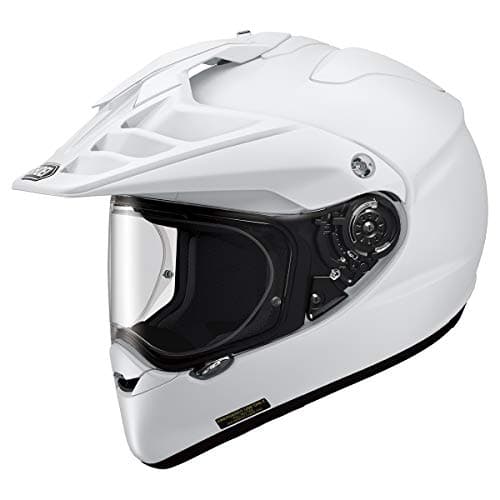
Shoei Hornet X2: Snell M2020D, 3.99 lbs in medium
From Best adventure and dual sport helmets for road and dirt
 See price on AmazonAmazon
Shoei RF-1400: quieter shell, SNELL M2020 and DOT
From Best full face motorcycle helmets for street and sport touring