Explainer
Motorcycle helmet size chart (cm and inches)
Published
Short answer
Most motorcycle helmets follow a similar size ladder: XS is about 53 to 54 cm (20.9 to 21.3 in), S 55 to 56 cm, M 57 to 58 cm, L 59 to 60 cm, XL 61 to 62 cm, 2XL 63 to 64 cm and 3XL 65 to 66 cm. Measure your head at its widest point, find your range, then confirm it on the brand's own chart, because sizes and shapes differ between brands and even between models.
Gear for this job
All 8 picks compared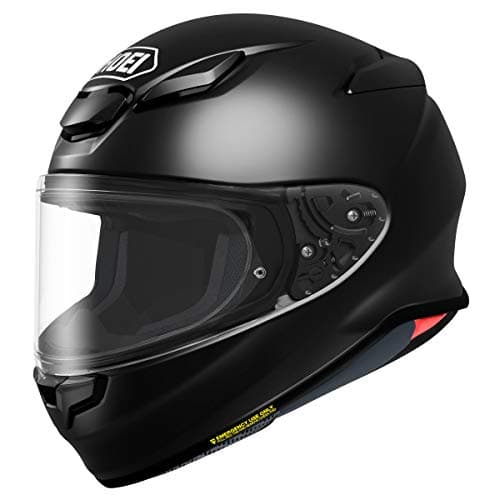
Shoei RF-1400: Snell M2020 and DOT listed
See price on AmazonSee it on Amazon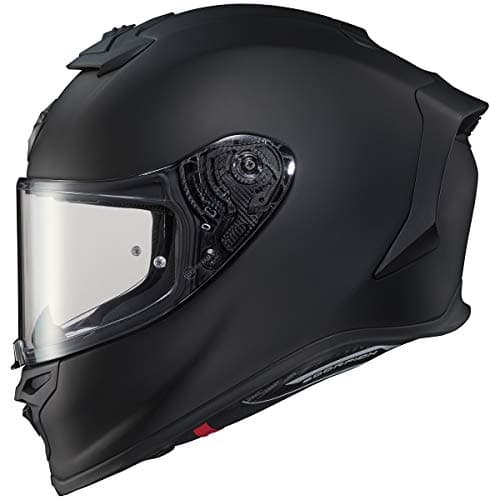
Scorpion EXO-R1 Air: DOT and ECE, 3.05 lb
See price on AmazonSee it on Amazon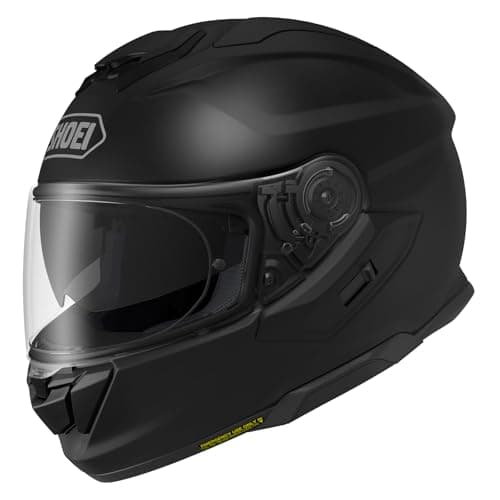
Shoei GT-Air 3: touring full face with sun visor
See price on AmazonSee it on Amazon
This page is for riders buying a helmet online or trying to work out why two helmets in the same size feel so different. It gives a generic size chart in centimeters and inches, explains how to measure your head correctly, and covers what to do when you fall between two sizes. It also explains why the chart printed by the brand you are buying always beats a generic one. If you just want a quick answer, enter your measurement in our helmet size finder, then come back here to understand the result.
Generic motorcycle helmet size chart
The table below shows the size ranges most helmet makers use. Treat it as a starting point. A brand may call a 58 cm head a medium while another calls it a large, and some brands publish half sizes or overlap their ranges by a centimeter.
Inch values are rounded. Helmet makers work in centimeters, so if you measured in inches, convert by multiplying by 2.54 and use the centimeter figure when you read a brand chart.
XXS
- Head circumference (cm)
- 51 - 52
- Head circumference (in)
- 20.1 - 20.5
- US hat size (approx.)
- 6 3/8 - 6 1/2
XS
- Head circumference (cm)
- 53 - 54
- Head circumference (in)
- 20.9 - 21.3
- US hat size (approx.)
- 6 5/8 - 6 3/4
S
- Head circumference (cm)
- 55 - 56
- Head circumference (in)
- 21.7 - 22.0
- US hat size (approx.)
- 6 7/8 - 7
M
- Head circumference (cm)
- 57 - 58
- Head circumference (in)
- 22.4 - 22.8
- US hat size (approx.)
- 7 1/8 - 7 1/4
L
- Head circumference (cm)
- 59 - 60
- Head circumference (in)
- 23.2 - 23.6
- US hat size (approx.)
- 7 3/8 - 7 1/2
XL
- Head circumference (cm)
- 61 - 62
- Head circumference (in)
- 24.0 - 24.4
- US hat size (approx.)
- 7 5/8 - 7 3/4
2XL
- Head circumference (cm)
- 63 - 64
- Head circumference (in)
- 24.8 - 25.2
- US hat size (approx.)
- 7 7/8 - 8
3XL
- Head circumference (cm)
- 65 - 66
- Head circumference (in)
- 25.6 - 26.0
- US hat size (approx.)
- 8 1/8 - 8 1/4
| Size | Head circumference (cm) | Head circumference (in) | US hat size (approx.) |
|---|---|---|---|
| XXS | 51 - 52 | 20.1 - 20.5 | 6 3/8 - 6 1/2 |
| XS | 53 - 54 | 20.9 - 21.3 | 6 5/8 - 6 3/4 |
| S | 55 - 56 | 21.7 - 22.0 | 6 7/8 - 7 |
| M | 57 - 58 | 22.4 - 22.8 | 7 1/8 - 7 1/4 |
| L | 59 - 60 | 23.2 - 23.6 | 7 3/8 - 7 1/2 |
| XL | 61 - 62 | 24.0 - 24.4 | 7 5/8 - 7 3/4 |
| 2XL | 63 - 64 | 24.8 - 25.2 | 7 7/8 - 8 |
| 3XL | 65 - 66 | 25.6 - 26.0 | 8 1/8 - 8 1/4 |
Note.A head measurement below about 51 cm or above about 66 cm sits outside most adult ranges. Look for youth sizes or brands that publish 4XL and 5XL.
How to measure your head for a helmet
Use a soft tailor's tape, not a metal tape measure. If you only have a string, mark it and lay it against a ruler. Ask someone to help if you can, because it is hard to keep the tape level on the back of your own head.
Take the measurement three times and use the largest number. A centimeter makes a full size difference, so a sloppy measurement is the most common reason an online order arrives too tight. Our full walkthrough is in how to measure your head for a motorcycle helmet.
- Widest point: about 1 inch (2.5 cm) above the eyebrows, just above the ears.
- Tape level all the way round, snug, not tight. Keep the largest of three readings.
- 1
Wrap the tape around your head about 1 inch (2.5 cm) above your eyebrows.
- 2
Run it just above the tops of your ears and around the widest part of the back of your head.
- 3
Keep the tape snug and level, but do not pull it tight enough to compress your hair.
- 4
Read the number in centimeters, repeat twice more, and keep the largest reading.
Why the brand chart wins over a generic chart
A size label only tells you the inside circumference the helmet is built around. It says nothing about the shape of that circle. Helmets are built on internal head forms that are long oval, intermediate oval or round oval, and two medium helmets can feel completely different if one is longer front to back and the other is wider at the temples.
Brands also use different numbers of shell sizes. A helmet sold in XS to 3XL might use two, three, four or five outer shells, with thicker or thinner EPS liners and pads making up the difference inside. The size breaks fall in slightly different places from brand to brand. That is why the chart on the product page of the exact model you are buying is the one to trust. If you are shopping Shoei, see our Shoei helmet size chart, and for Arai see the Arai helmet size chart.
Head shape is the other half of fit. Read motorcycle helmet head shapes if every helmet you try pinches your forehead or your temples.
Long oval
Fewer models; some makers sell long oval lines, such as Arai's Signet-X.
Intermediate oval
The most common shape; most models from the big brands target it.
Round oval
Fewer models; check each maker's fit notes for rounder lines.
What to do if you fall between two sizes
If your measurement lands on a boundary, such as 58 or 59 cm, try both sizes if at all possible. Most riders end up in the smaller of the two, because the comfort liner and cheek pads compress over the first weeks of riding. A helmet that feels a touch snug in the store often feels right after a few rides.
Do not go up a size just because the smaller one squeezes your cheeks. Cheek pressure is normal and expected. Size up only if the helmet causes a focused pressure point on your forehead, temples or the back of your head that does not ease after 20 to 30 minutes. Many brands sell thinner or thicker cheek pads, which let you fine-tune fit without changing the shell.
- Snug, even pressure all around the head: right size.
- Cheeks pushed up but no hot spots: right size, it will settle.
- Sharp pressure on the forehead after 20 minutes: possibly wrong shape or too small.
- Helmet rolls forward or rocks when you push the chin bar: too big.
How to check the size once the helmet arrives
Put the helmet on, fasten the strap, and wear it around the house for at least 20 to 30 minutes. Keep the tags on and avoid scuffing the shell so you can still return it. Our guide on how a motorcycle helmet should fit covers the full checklist, but these quick tests catch most problems.
- 1
Look straight ahead. Your eyes should sit near the center of the eye port with the brow of the helmet just above your eyebrows.
- 2
Hold the chin bar and try to move the helmet side to side and up and down. Your skin should move with the helmet rather than the helmet sliding over your head.
- 3
With the strap fastened, try to roll the helmet forward off your head from the back. It should not come off.
- 4
Take it off and look for red marks on your forehead. A deep red line usually points to a shape mismatch.
Size charts for different helmet types
Full face, modular, adventure and open face helmets from the same brand usually share one size chart, but they do not always fit the same. Modular helmets have a hinge and chin bar mechanism that can change how the cheek pads sit. Open face helmets have no chin bar, so they can feel looser at the jaw even when the crown fits well.
If you already own a helmet from a brand and it fits well, the same size in another model from that brand is a good starting point, but still check the model chart. For help choosing a type first, see how to choose a motorcycle helmet or browse our modular helmet guide.
Frequently asked questions
What size motorcycle helmet do I need for a 22.5 inch head? 22.5 inches is about 57 cm, which is a medium on most charts. Confirm it on the chart for the model you want, since some brands place 57 cm in a small.
Should a new motorcycle helmet feel tight? It should feel snug, with firm, even pressure on the cheeks and crown. It should not cause sharp pain or a headache. Pads compress with use, so a slightly snug new helmet usually becomes comfortable.
Are helmet sizes the same as hat sizes? They are related, since both come from head circumference, but helmet makers size in centimeters. Use a tape measure rather than your hat size for the most accurate result.
Can I make a helmet that is too big fit? Thicker cheek pads can take up a small amount of space, but they cannot fix a shell that is a full size too large. A loose helmet can shift in a crash, so exchange it for the correct size.
What you need for this
- See price on AmazonAmazon
Shoei RF-1400: quieter shell, SNELL M2020 and DOT
From Best full face motorcycle helmets for street and sport touring
 See price on AmazonAmazon
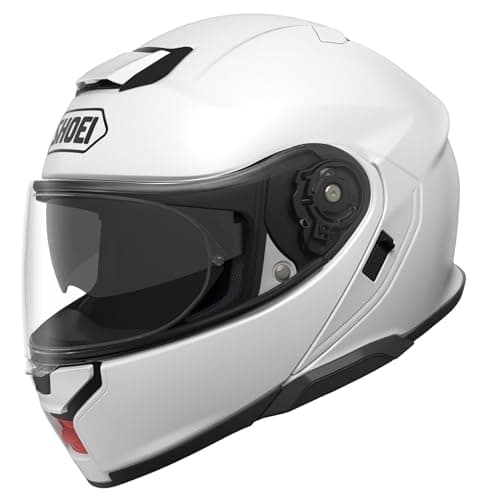
Shoei Neotec 3: modular that reduces wind noise
From Best modular motorcycle helmets for touring and commuting