Explainer
Are Arai helmets safer than other brands?
Published
Short answer
Arai helmets are certified to the same standards as other premium helmets, including DOT and, on many models, Snell and ECE 22.06. No certification ranks one passing brand as safer than another. What sets Arai apart is a design approach focused on a round, smooth shell meant to glance off surfaces, plus hand-built construction and fit options. A correctly fitted helmet matters more than the logo.
Gear for this job
All 6 picks compared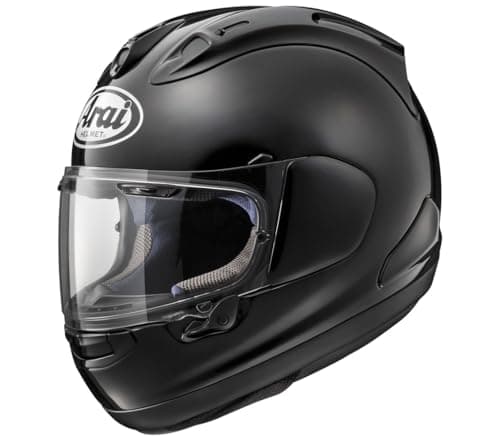
Arai Corsair-X: intermediate oval, PB-SNC2 shell
See price on AmazonSee it on Amazon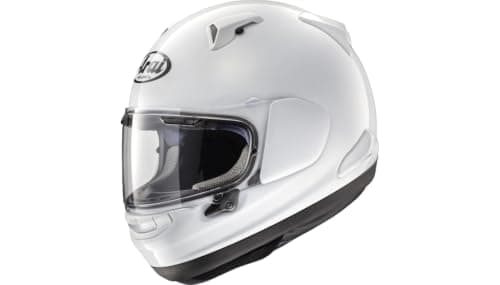
Arai Signet-X: long oval for narrow heads
See price on AmazonSee it on Amazon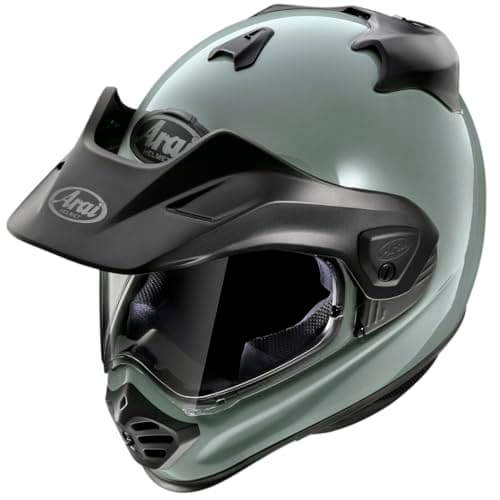
Arai XD-5: adventure helmet with three setups
See price on AmazonSee it on Amazon
Arai has a strong reputation, and riders often assume its high price means more protection. This page looks at what helmet certifications actually measure, why a pass is a pass, what independent ratings add, and how Arai's shell philosophy differs from other brands. It also covers the differences between Arai models and why fit is the deciding factor. It is for riders weighing an Arai against other premium or mid-range helmets.
What safety certifications measure
In the US, every street helmet must meet DOT FMVSS 218. Many helmets also carry ECE 22.06, the current UN regulation used in Europe and many other countries, and some carry Snell M2020, a voluntary standard from the nonprofit Snell Memorial Foundation. Each standard drops or strikes helmets under set conditions and checks that the force reaching a headform stays below a limit, that the shell resists penetration where required, and that the strap holds.
These are pass or fail tests. A helmet that passes has met the standard on the samples tested. The labels do not grade helmets against each other, so two helmets that both pass Snell are not ranked. Use the helmet rating decoder and our DOT vs ECE vs Snell article for details on each.
- 1DOT FMVSS 218 sticker on the back of the shell
- 2ECE 22.06 label sewn on the chin strap with the approval number
- 3Snell M2020 sticker inside the helmet, often under the comfort liner
A helmet can carry more than one label. For street use in the US, the DOT label is the required one.
Arai and certification
Arai has long supported the Snell standard and certifies many of its helmets to it, alongside DOT. Models sold in Europe carry ECE 22.06. The labels on any given helmet depend on the model and the market, so check the stickers and the chin strap label on the specific helmet you buy.
Carrying several certifications shows the helmet passed several sets of tests with different impact speeds, anvils and test points. That is meaningful. It does not by itself prove the helmet will perform better than another helmet that passed the same tests.
Arai's round shell design approach
Arai's stated philosophy centers on the shell's ability to glance off a surface in a crash rather than catch on it. Its shells are built around a smooth, round shape, which Arai describes using a minimum curvature standard it calls R75. Vents, visor pivots and other parts are designed to sit low or break away on impact so they do not snag.
The idea is that a helmet that slides across the road transmits less rotational force to the head than one that grips and jerks. This is a design approach, not a separate certification. ECE 22.06 now includes an oblique impact test that measures rotational effects, and other makers address rotation with systems like MIPS; see MIPS motorcycle helmets.
Round, smooth shell with breakaway parts
- How it works
- Helps the helmet glance off rather than catch
- Used by
- Arai's core design approach
Slip liner such as MIPS
- How it works
- Low-friction layer lets the helmet move slightly relative to the head
- Used by
- Several brands on selected models
Oblique impact test
- How it works
- Measures rotational effects in certification
- Used by
- ECE 22.06 standard
| Approach | How it works | Used by |
|---|---|---|
| Round, smooth shell with breakaway parts | Helps the helmet glance off rather than catch | Arai's core design approach |
| Slip liner such as MIPS | Low-friction layer lets the helmet move slightly relative to the head | Several brands on selected models |
| Oblique impact test | Measures rotational effects in certification | ECE 22.06 standard |
What independent ratings add
Programs like the UK's SHARP scheme buy helmets and test them at several speeds and locations, then give a star rating. These ratings can help compare helmets that all pass the legal standard. Results for Arai, like other premium brands, vary by model, and some lower-priced helmets from other brands score highly.
That variation is the honest answer to the question. Being an Arai does not guarantee a helmet will rank above every other brand in every test. It does mean you are buying from a maker with a clear safety design philosophy, consistent certification and strong quality control. See how much a good helmet costs for what extra money does buy.
Fit is the deciding factor
A helmet only protects you if it stays in position. Arai offers interior shapes aimed at different heads and sells cheek pads and liners in several thicknesses, and some models allow peel-away layers in the EPS comfort areas to relieve pressure points. Many riders choose Arai specifically because one of its shapes fits them well.
Arai is often described as fitting intermediate to long oval heads, while the exact fit varies by model. Use the Arai helmet size chart and our guide to helmet head shapes, then do the fit checks in how should a motorcycle helmet fit. If an Arai does not fit you as well as a Shoei or HJC, the better-fitting helmet is the better choice.
Long oval
Fewer models; some makers sell long oval lines, such as Arai's Signet-X.
Intermediate oval
The most common shape; most models from the big brands target it.
Round oval
Fewer models; check each maker's fit notes for rounder lines.
Differences between Arai helmets
Arai's lineup covers sport, touring, adventure and open face riding. Models differ in ventilation, weight, visor systems, noise and interior shape, not in a basic safety philosophy. Higher-end models may add features like more advanced venting or visor systems. Arai does not offer a traditional flip-up modular; our article on whether Arai makes a modular helmet explains why.
For a model-by-model view, see the best Arai helmets by riding style. To compare with its main rival, read Shoei vs Arai.
Frequently asked questions
Are Arai helmets safer than Shoei? Both make helmets certified to DOT and ECE, and many to Snell. Neither is proven safer across the board. Choose the one that fits your head better.
What safety ratings do Arai helmets have? Depending on model and market, DOT FMVSS 218, Snell M2020 and ECE 22.06. Check the labels on the exact helmet you buy.
Why are Arai helmets so expensive? Hand-built construction in Japan, multiple shell sizes, extensive quality control and fit options all add cost.
Is a Snell-rated helmet safer than a DOT-only helmet? Snell adds tests beyond DOT, but both are pass or fail. A Snell pass shows the helmet met a broader set of tests, not that it will perform better in every crash.
What you need for this
- See price on AmazonAmazon
Arai Corsair-X: intermediate oval, PB-SNC2 shell
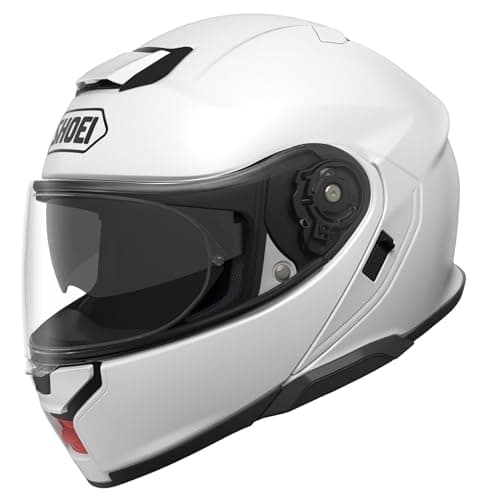 See price on AmazonAmazon
Shoei Neotec 3: modular that reduces wind noise
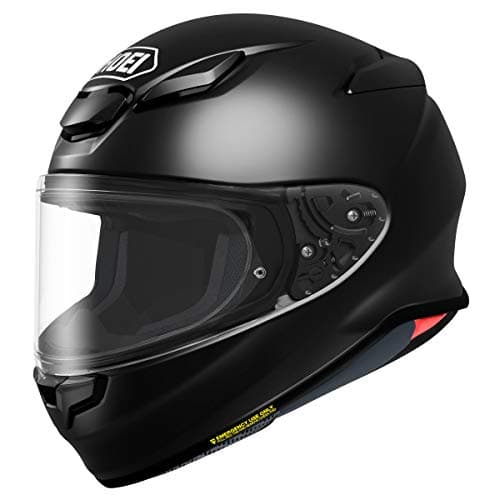 See price on AmazonAmazon
Shoei RF-1400: quieter shell, SNELL M2020 and DOT
From Best full face motorcycle helmets for street and sport touring