Explainer
How mesh motorcycle intercoms work
Published
Short answer
In a mesh intercom, every unit in the group can talk to and relay for every other unit, so there is no fixed chain to break. If one rider drops back, the others route around the gap and the rider rejoins automatically when back in range. Classic Bluetooth intercoms link riders in a chain, where losing the middle rider can split the group. Range is listed per hop, so a group spread out in a line can cover more distance than any single link.
Gear for this job
All 8 picks compared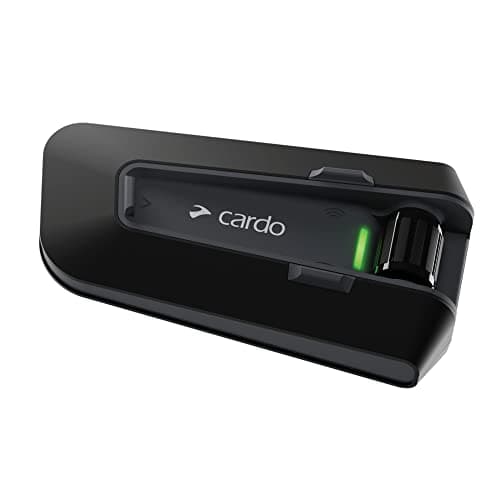
Cardo Packtalk Neo: mesh for up to 15 riders
See price on AmazonSee it on Amazon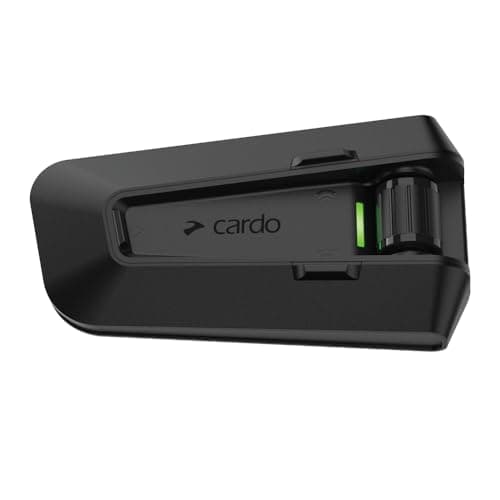
Cardo Packtalk Pro: crash detection, JBL 45 mm
See price on AmazonSee it on Amazon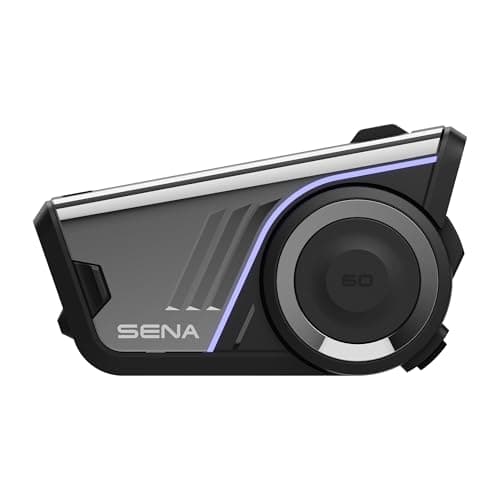
Sena 60S: Wave, Mesh 3.0 and Bluetooth, 24 hours
See price on AmazonSee it on Amazon
Mesh is the main reason riders upgrade intercoms. Before mesh, getting four riders talking meant pairing them in a careful chain and hoping no one in the middle fell behind. This page explains in plain terms how mesh intercoms like Cardo's DMC (Dynamic Mesh Communication) and Sena's Mesh Intercom work, how they differ from Bluetooth intercom, what listed ranges actually mean on the road, and why Cardo and Sena mesh units cannot join the same mesh group. It is for riders choosing a first intercom or wondering why their group keeps splitting.
Bluetooth intercom: the chain
Standard Bluetooth intercom pairs two units directly. To connect more than two riders, units are linked in a chain: rider A pairs with B, B with C, C with D. Each unit typically has a limited number of intercom links, so the chain is fixed when you set it up.
The weak point is the middle of the chain. If rider B stops for fuel or falls out of range, A loses contact with C and D. Rejoining often needs someone to press a button. Bluetooth intercom still has its uses: it works between brands and is good for two riders, such as a rider and passenger.
- Fixed pairing order set up in advance.
- A break in the middle splits the group.
- Limited number of riders in practice.
- Works across most brands for one-to-one links.
Mesh intercom: the network
In a mesh network, there is no fixed order. Each unit can connect to any other unit in the group and can pass audio along to others. If rider B drops back, rider A's audio can still reach C and D through whichever units are in range. When B catches up, B rejoins automatically.
Cardo describes this behavior as auto healing in its second-generation DMC. Sena's mesh works on a similar principle and offers both private group mesh and open mesh channels, where anyone on the same channel can join. Sena lists its Spider ST1 open mesh as allowing communication with a near-limitless number of riders on a channel.
Connection
- Bluetooth intercom
- Fixed chain of pairs
- Mesh intercom
- Every unit can link and relay
If a rider drops out
- Bluetooth intercom
- Group can split
- Mesh intercom
- Others route around the gap
Rejoining
- Bluetooth intercom
- Often manual
- Mesh intercom
- Automatic when back in range
Group size
- Bluetooth intercom
- Small in practice
- Mesh intercom
- Larger groups, set by the system
Cross-brand
- Bluetooth intercom
- Usually possible one-to-one
- Mesh intercom
- Only within the same mesh system
| Bluetooth intercom | Mesh intercom | |
|---|---|---|
| Connection | Fixed chain of pairs | Every unit can link and relay |
| If a rider drops out | Group can split | Others route around the gap |
| Rejoining | Often manual | Automatic when back in range |
| Group size | Small in practice | Larger groups, set by the system |
| Cross-brand | Usually possible one-to-one | Only within the same mesh system |
What listed range really means
Manufacturers list mesh range as the distance between two riders in open, clear terrain. Cardo lists the Packtalk Neo at up to about 1.6 km (1 mile) between riders, for up to 15 riders. Sena lists the 60S mesh at 2 km (1.2 miles) with two users, extending to 8 km (5 miles) with six or more users spread out. The longer figure comes from relaying through the riders in between.
On real roads, range is usually shorter. Radio signals are blocked by hills, buildings, trees and even the riders' own bodies and bikes. In twisty, hilly country you may lose a rider around a bend at a fraction of the listed range, then pick them up again on the next straight. Antenna position on the helmet and the helmet itself also play a part.
- Open, flat terrain: closest to listed range.
- Hills and valleys: much shorter, drops behind crests.
- Cities: buildings block and reflect signals.
- Large groups spread in a line: range extends through relaying.
Why groups stay connected
Mesh stays connected because the group does not depend on any single rider. As long as each rider is within range of at least one other rider who is connected to the rest, everyone stays in the conversation. In a group riding close together, that is usually true most of the time.
Groups that split are usually spread too far apart, on mismatched firmware, or set up with different group settings. Updating every unit and creating the group together fixes most problems. See Cardo Packtalk problems and Sena mesh not working for brand-specific fixes.
Mixing Cardo and Sena riders
Cardo DMC and Sena Mesh are separate systems. A Cardo unit cannot join a Sena mesh group, and a Sena unit cannot join a Cardo DMC group. To talk across brands, riders use Bluetooth intercom pairing, typically linking one Cardo rider to one Sena rider. Some units can bridge that Bluetooth link into their mesh group so the whole group can hear; check your model's manual for what it supports.
If your riding group is mostly one brand, buying the same brand keeps things simple. Our Sena vs Cardo comparison and the head-to-heads Packtalk vs Sena 50S and Packtalk vs Sena 60S go deeper.
Which mesh intercoms are out there
Cardo's current Packtalk models, including the Edge, Pro and Neo, all use DMC mesh; see our Cardo Packtalk guide. Sena's mesh lineup includes the 50S, 50R, 60S and 30K headsets and the Spider ST1, plus helmets with mesh built in; see our Sena intercom guide and Sena smart helmet guide.
Sena's 60S also lists a WAVE intercom mode that uses a phone's data connection to let riders talk from virtually anywhere, which is a different technology from mesh. For setting up Sena, see how to set up a Sena 50S; for Cardo, see how to pair a Cardo Packtalk.
Frequently asked questions
How far does a Cardo Packtalk reach? Cardo lists the Packtalk Neo at up to about 1 mile between riders. Real range is usually shorter in hills, trees and cities, and a group relays to cover more distance.
Does mesh intercom use cell data? No. Mesh is a direct radio link between units. Phone-based features such as Sena's WAVE intercom do use data.
Can a Sena and a Cardo use mesh together? No. Their mesh systems are not compatible. Use Bluetooth intercom pairing to connect across brands.
Is mesh better than Bluetooth intercom for two riders? Both work well for two riders. Mesh is easier to set up and reconnects automatically, while Bluetooth intercom is the way to link across brands.
What you need for this
- See price on AmazonAmazon
Cardo Packtalk Neo: mesh for up to 15 riders
From Best motorcycle intercoms for solo riders, couples and groups
- See price on AmazonAmazon
Sena 60S: WAVE, Mesh 3.0 and 24 h talk time